Friday, 5 February 2021
January films 2021
Friday, 29 January 2021
The 'BFI’s 100 Greatest Films of All Time’ revisited
Friday, 13 March 2020
By Force Alone - random thoughts!
Tuesday, 14 January 2020
Little Women and the climate crisis.
• I love Gerwig’s direction and most of the choices behind the camera – though, does Alexandre Desplat’s score lead us a little too often? Yes.
• Don’t hate me BUT I am, it seems, one of the few human beings unconvinced by Saoirse Ronan and Timothée Chalamet, but they’re both great here and, as awful – racist, sexist - as the Oscar (and Bafta) nominations are, I believe she totally deserves her nomination. She is FANTASTIC.
• Is it feminist enough? This is a debate on the left with which you may be unfamiliar. It’s partly, but far from completely, a book v film argument. I don’t like the book and cannot remember all the details so I try to judge the film versions on their own merits. I like that we get more of older Amy, I like the ending. I like the time-altered structure that may on occasion be a little awkward – the repetition on Beth’s death scene? – but more often gives us interesting and thoughtful juxtapositions…
• …and so it seems to me that we still, urgently, need narratives about sisterhood, community, play, kindness and compassion that intertwine with stories about equality and justice, self-definition and self expression, the need for art and artists and much more.
• It is, like the other great adaptations, a big, warm hug of a film that gives us a serious tale wrapped up in nostalgia, beautiful landscapes, warm and comforting interiors, familiar and relatable characters…
• …thus Gerwig begins her film with that title card: “I had lots of troubles; so I write jolly tales.” Despite her structure and the playful ending …
• …this is still a very familiar kind of film. It runs on a very fine border between earned sentiment and universal sentimentality. It runs on a fine distinction between hope and optimism. It runs on familiar structures – and yes, to take one example, Beth’s death feels like a very familiar device that allows us to feel the pain of loss but with a very quick closure and without the real-life consequences of such a loss. It is sad but cathartic rather than challenging or difficult. I do, of course (!) cry at Beth, the piano and Mr Laurence - AND try to read it in terms of loss and love - BUT Little Women glosses over, in a very romantic way, class conflict.
And that’s where my problem lies. First let me be clear that I’m not picking on this film. I’d happily have Little Women win Best Picture over most of those other snooze fests/really stupid films/tired late works. I’ll watch it again with great pleasure. It’s just that at the beginning of the new decade somehow my questions and thoughts won’t be swallowed down any more.
My problem is with fantasy and nostalgia. My problem is with happy endings. My problem is with carrying on as normal. My problem is with rushing things and glossing over pain and distress. And even though I know I’m entering a dangerous maze-like path - the idea that we should be prescriptive in any way when it comes to art has always been abhorrent to me - I’m wondering if there are films we need far more.
Time is running out. I still feel like a mad person for saying it but the evidence in 2019 was OVERWHELMING. Think of it as Year 1 of the new normal and that things are only going to get worse. I’m not suggesting that people won’t find ways of fighting back or that there won’t be resistance – we will be forced to fight back and sometimes they will succeed. I am suggesting that we’re already locked into enough warming that we are facing challenges – political, social, practical – that we haven’t got answers for – and that billions will suffer or die as a result. And much sooner than most people can imagine. Happy endings are running out. Normal lives – or what white people in the developed world thought of as normal – are coming to an end. And as usual it will be poor and working class people of colour around the world who will suffer the most to begin with and always.
This HAS to have consequences for art doesn’t it? The art that we need to imagine differently. The art we need to reflect (?) the perilousness of our circumstances. The art that will provide a sense of ‘Pessimism of the Intellect, Optimism of the Will’ [and maybe Little Women gives you that?] The art that will help us chart a path between giving up or stupid optimism, or between waiting for others to lead the way or forging a path ourselves.
And my sense is that we have to start challenging every little degree of fantasy and sentimentality in our treasured narratives that pretend to make sense of the world or give us hope for the future. My whole experience of art - actually it's my whole experience of life and making decisions - is being framed in a new way: part of my brain is now, always, screaming “But, we’re running out of time” "Wake up!" “Half of the world is in the grip of vile nationalist governments with fascism just around the corner”
I wish I didn’t hear that scream but I know I need to listen to it
Monday, 24 December 2018
Films of the Year 2018
There is little here that you won't find on many of the 'Best of' Lists so its easy to find reviews and recommendations, context and background.
- Zama (Lucrecia Martel)
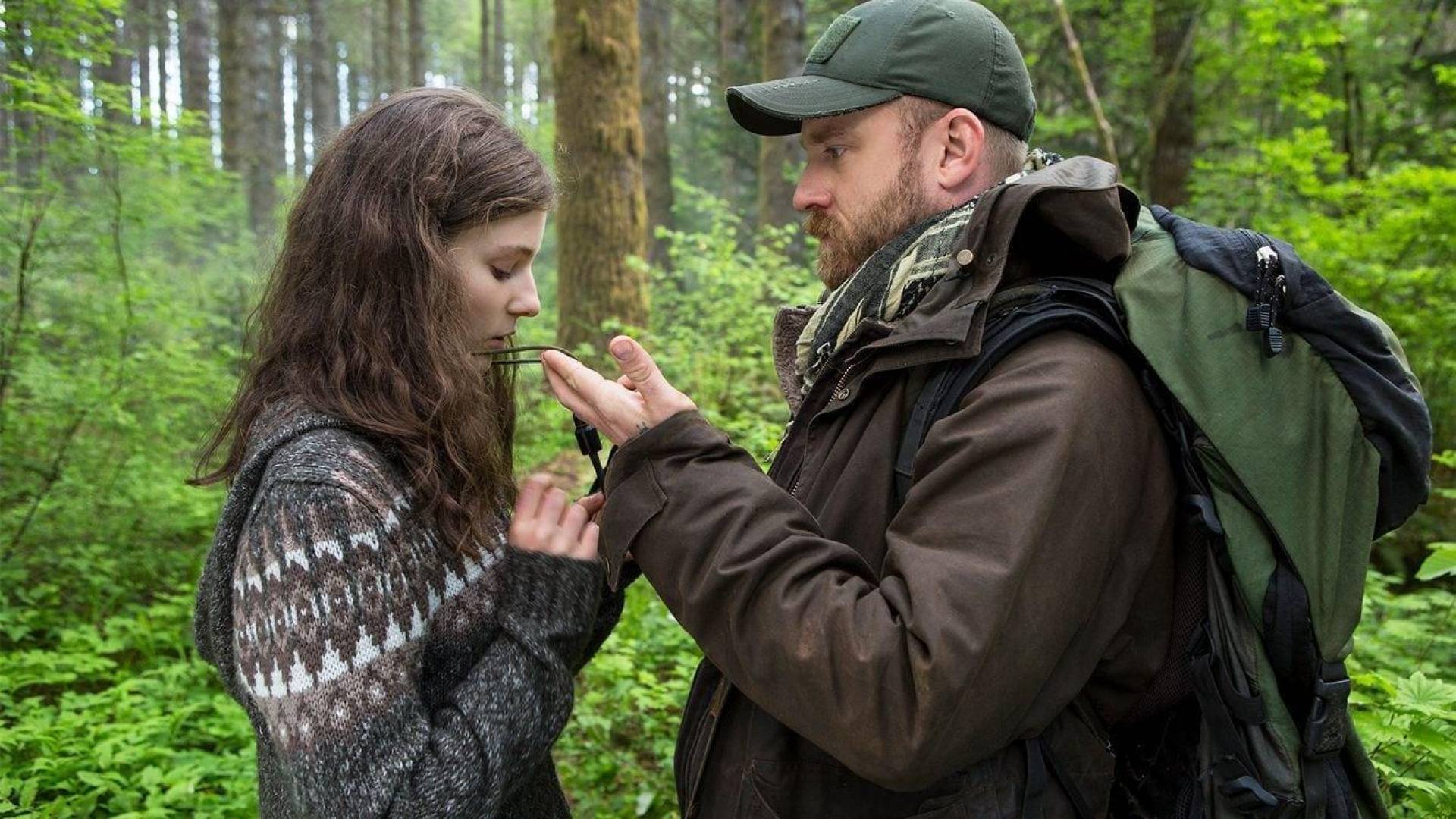
- Leave No Trace (Debra Granik)
- A Fantastic Woman (Sebastián Lelio)
- Roma (Alfonso Cuarón)
- Shoplifters (Hirokazu Kore-eda)
- Zama (Lucrecia Martel)
- Leave No Trace (Debra Granik)
- A Fantastic Woman (Sebastián Lelio)
- Roma (Alfonso Cuarón)
- Shoplifters (Hirokazu Kore-eda)
- The Hate U Give (George Tillman Jr.)
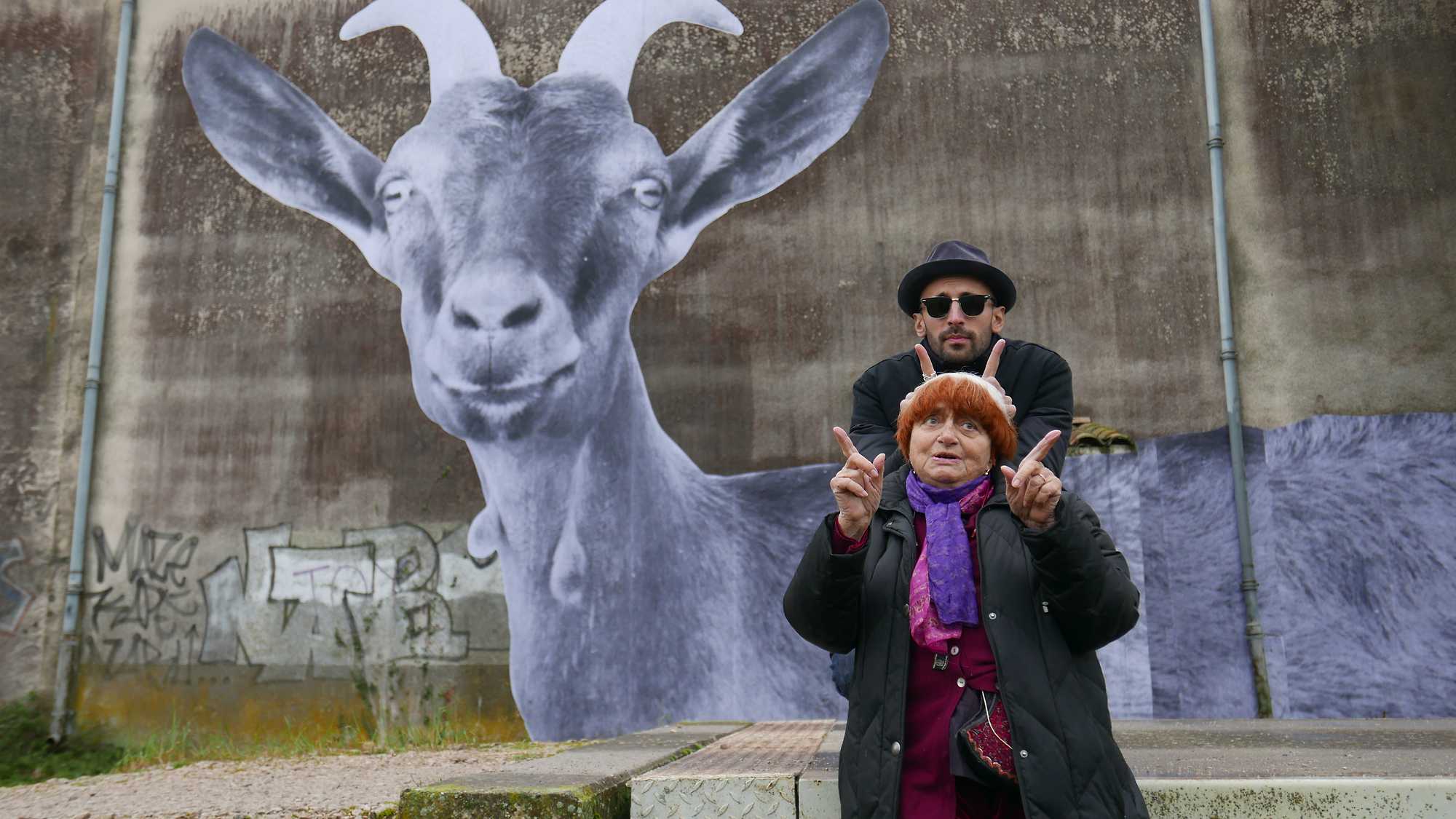
- Faces Places (Agnes Garda)
- Western (Valeska Grisebach)
- You Were Never Really Here (Andrea Arnold)
- Loveless (Andrey Zvyagintsev)
- First Reformed (Paul Schrader)
- 120 BPM (Robin Campillo)
- Cold War (Paweł Pawlikowski)
- Blindspotting (Carlos López Estrada)
- A Star is Born (Bradley Cooper)
- A Ballad for Buster Scruggs (Coen Brothers)
- The Miseducation of Cameron Post (Desiree Akhava)
- Sorry to Bother You (Boots Riley)
- Sweet Country (Warwick Thornton)
- Love Simon (Greg Berlanti)
- Life and Nothing More (Antonio Méndez Esparza)
- Widows (Steve McQueen)
- Jeune Femme (Léonor Serraille)
- BlacKkKlansman (Spike Lee)
- The Square (Ruben Östlund)
- The Breadwinner (Nora Twomey)
- I, Tonya (Craig Gillespie)
- Beast (Michael Pearce)
- Annihilation (Alex Garland)
- Disobedience (Sebastián Lelio)
- Coco (Lee Unkrich)
- Apostasy (Dan Kokotajlo)
- Summer 1993 (Carla Simon)
It's always been the case that most of the films I watch are from Hollywood or the art-house circuit. I often wish there were easy (and cheap) ways of seeing other films and more documentaries as it's clear there are a different layer of films out there. So I would point you to the Louis Proyect Blog. He is fun to disagree with and there is a lot to discover in the films he reviews and searches out.
Wednesday, 12 December 2018
Interlude
Thursday, 12 April 2018
Clarke Award 2018
This year there are 108 books on the submissions list so first of all well done to the judges - that is a massive undertaking to read so much. I've only read a tawdry 24 and doubt I'll get round to too many more - with the Man Booker International and the Women's Prize long lists plus my own non-fiction projects there isn't enough time! For the record I've read Allan, Barker, Booth, Bradley, Campbell, Charnock, Doctorow, Hamid, Harkaway, Helle, Hunter, Jemisin, Kalfar, Leckie, Ha Lee, Lennon, McAuley, Mieville, Newitz, Palmer, Roberts, Robinson, Tea, Vandermeer. I hope to get through Kleeman, Robson and maybe Sullivan before I go to back to school.
OK, so I've done a quick search and I believe there is a 2:1 split with around 72 of the texts written by men. There were a couple of authors obviously keeping their gender from the publicity material and I didn't want to pry any further. Apologies if the number is out by one or two. I believe their are 5 BAME authors. Again, my search was relatively thorough but could be slightly out. Whatever way you want to think about those numbers you'd have to be somewhat heartbroken at the state of publishing and the state of the world. There are all kinds of initiatives in other realms and I would humbly suggest that everyone involved in SF and fantasy need to do more.
The good news however is that there are some brilliant books on that list. So many that my first request to the judges is to REBEL because I'm going to cheat and have a shortlist of 8: I think they should do the same too. Mwahahahahahahaha. Yep, don't care. Or rather, I do care.
First of all it allows me to contentedly keep to my own rules - at least a 50/50 split of men/women and at least 2 books by BAME authors in the shortlist; it also allows me to include all the books that I believe should be part of the discussion. That said I'm completely open to reading more of the books - if there is something like The Swan Book hiding in there I hope someone will let me know asap. I'm sure the Shadow Clarke discussions will persuade me to read more too.
There's one novel in particular that I love, but can't find a place for it on list - I would urge you all to read Spaceman of Bohemia. I'd also recommend Campbell, Lennon and Vandermeer - fantastic novels. It's nearly two years since I read Clade so it isn't imprinted in my mind like the other novels but it's a really important book and I'm hoping one of the Shadow Clarke writers will choose to think about it. I read The Real Town Murders last August and it suffered a little from my glum mood. I reread it again a couple of weeks ago along with Matha Wells's All Systems Red and I can easily say that it was the most joyful reading weekend of the year. Both novels are smart, funny and tense - a wonderful and unusual combination. Read them both.
More generally? There certainly is a lot of dystopian writing going on at the moment isn't there? I have to say that I find quite a bit of it irritating. What's most annoying is that some writers don't seem very interested in ideology or in the mechanisms of social and political change. It also seems as if many have bought into essentialist and determinist ideas about human nature. I appreciate that it's difficult - these are dark and absurd times. Our political leaders are venal and opportunistic simpletons. Their partnership with the ruling class makes for despair and fearfulness. I think it's genuinely difficult for people to imagine progressive political organisation and collective action unimpeded by a craven media and state bigotry. Yet I've been reading Rebecca Solnit's A Paradise Built in Hell desperate, perhaps, to remind me that humans are social beings that yearn for community, purposefulness and meaningful work too. Is there a way to throw off the muck of ages and the rank ideologies of capitalism? I don't know, but I do want my dystopias, utopias and SF to have some kind of interesting and searching political awareness. My suspicion is that too many are failing in this regard.
My now traditional (and provisional) list then:
The Rift - Nina Allan. Along with Jenny Erpenbeck's Go, Went, Gone, my novel of the year. It's sensational and fully deserves its BSFA and Kitschiest awards. A novel, like Central Station last year, to fall in love with.
Exit West - Mohsin Hamid. I read this almost a year ago I guess. There are lots of people in the speculative community that love this book. I have a reservation or two and so hope to read it again and join in Shadow Clarke discussions. Whatever my doubts it needs and deserves to be part of the discussion.
Gnomon - Nick Harkaway. Blimey! SO much to think about. So many notes. Mind blown.
The Stone Sky - N.K.Jemisin. I intend to read all three again before the Clarke is awarded and get my head around the full weight of the achievement.
Austral - Paul McAuley. Beautiful. McAuley is such a brilliant writer and this may be his best novel. Maybe his most important one too?
Too Like the Lightning - Ada Palmer. Copious notes and looking forward to parts 2 and 3.
New York 2140 - Kim Stanley Robinson. There is so much I need to say about this novel. I know that some think it too big and baggy, some think it too Keynesian and too liberal. I loved every second and I'm fascinated by the decisions Robinson has made and the (possible) effects they have. Essay on the way.
Black Wave - Michelle Tea. Weirdly for me, I've been listening to this when I run. It's brilliantly read by Tea herself. As pleasurable in its way as the Harkaway (which is saying something)
First of all this list is almost identical to one Adam Roberts posted on Twitter. I promise I'm not copying Adam! Ian Mond and Nina Allan have played the same game so take a look at their provisional lists too. Finally people will know that I am a big Nicola Barker fan and maybe surprised by the exclusion of H(A)ppy. Weirdly perhaps, reading Gnomon subsequently has made me revise my ideas a little but there is much I can't seem to forgive in it. More later...
Good look to the judges and everyone involved. Don't forget that rebellion is GOOD.
Looking forward to the Shadow Clarke discussions with much anticipation.
All twitter recommendations appreciated :-)