Thursday, 4 June 2026

Clarke Award 2026 - Submissions list and my reading

 "One would think, given the scale of the challenge, that there should be emergency public meetings in every village, town and city every week to thrash out solutions. Instead, given a pervasive sense of powerlessness and futility, the most common response is what psychoanalysts call ‘disavowal’: I know perfectly well that things can’t go on this way but, because life is hard enough and I have bills to pay, I behave as if I don’t. This is the emotional substratum for what Renée Lertzman calls ‘environmental melancholia’, an undercurrent of sadness and thwarted mourning which can register in outward form as a defensive indifference."

(Seymour, Richard. The Disenchanted Earth: Reflections on Ecosocialism and Barbarism (p. 16). The Indigo Press.)


   I started following the Clarke in 2010. My partner had died in 2009 and I've always loved and needed reading projects, then more than ever. I'm sure it was also partly the China Mieville effect. As a socialist I relished listening to China talk about books and genre almost as much as I enjoyed his books. I was also completely smitten with Mike Harrison's Kefahuchi Tract books. At some point I discovered Adam Roberts' reviews on his blog and Infinity Plus. 

   So, I've been doing this for a while. I tend to follow other book prizes too - the Women's Prize since its inception: the Orange prize in 1996(!) as well as the Booker, International Booker and more recently the Goldmiths, the Ursula Le Guin and the Climate Prize. It's just an easy and fulfilling way to navigate my way through the reading year. Sometimes, when I'm feeling mildly reflective I wonder why I do it because the shortlists often infuriate me. WTF were the Booker judges ON last year!? So maybe I'm not particularly smart. My favourite book project last year was rereading all of Virginia Woolf though the International Booker longlist was a banger.

   Anyway, here I am, another Clarke, the 40th birthday no less and I think I've managed to read more than any other year. Thanks to Tom and his team - Tom, do you have a team or do you do it all yourself? - for always publishing the Submissions list. I always discover something new even though I try to keep informed about all the 'best' SF books, and its always interesting to analyse the list a little. What do I read to make the reading decisions that I do? The Guardian, Strange Horizons, Locus, Reactor, various podcasts and I also rely on authors that I value. So if Mike Harrison or Percvival Everett, Ali Smith or Nina Allen, James Bradley or Elif Batuman, amongst many others, recommend a book I will probably try and read it. It's a LONG list and obviously I don't get around to everything.

I've read 36 novels from the submissions list. You'll notice that I favour 'literary' over pure genre but that doesn't mean I can't love or appreciate genre just as much:

  1. A Granite Silence — Nina Allan (riverrun)
  2. On the Calculation of Volume I — Balle Solvej, translated by Barbara J. Haveland (Faber & Faber)
  3. On the Calculation of Volume II — Balle Solvej, translated by Barbara J. Haveland (Faber & Faber)
  4. Old Soul — Susan Barker (Penguin)
  5. Beautyland — Marie-Helene Bertino (Vintage)
  6. Landfall — James Bradley (Hodder & Stoughton)
  7. Outlaw Planet — M. R. Carey (Orbit)
  8. Every Version of You — Grace Chan (VERVE Books)
  9. Rakesfall — Vajra Chandrasekera (Solaris)
  10. The Book of Guilt — Catherine Chidgey (John Murray)
  11. Red Sword — Bora Chung, translated by Anton Hur (Honford Star)
  12. A Line You Have Traced — Roisin Dunnett (Magpie)
  13. Metal from Heaven — August Clarke (Solaris)
  14. Helm — Sarah Hall (Faber & Faber)
  15. Sleeper Beach — Nick Harkaway (Corsair)
  16. Under the Eye of the Big Bird — Hiromi Kawakami translated by Asa Yoneda (Granta Books)
  17. The Dream Hotel — Laila Lalami (Bloomsbury Circus)
  18. City of All Seasons — Oliver K. Langmead and Aliya Whiteley (Titan Books)
  19. Some Body Like Me — Lucy Lapinska (Gollancz)
  20. Vanishing World — Sayaka Murata translated by Ginny Tapley Takemori(Granta Books)
  21. Symbiote — Michael Nayak (Angry Robot)
  22. Slow Gods — Claire North (Orbit)
  23. Esperance — Adam Oyebanji (Arcadia)
  24. Luminous — Sylvia Park (Magpie)
  25. The Expansion Project — Ben Pester (Granta Books)
  26. Big Time — Jordan Prosser (Dead Ink)
  27. There is No Antimemetics Division — qntm (Del Rey)
  28. A Thousand Blues — Cheon Seon-ran, translated Chi-Young Kim (Doubleday)
  29. Blob: A Love Story — Maggie Su (Sceptre)
  30. When There Are Wolves Again — E. J. Swift (Arcadia)
  31. Shroud — Adrian Tchaikovsky (Tor)
  32. The Book of Records — Madeleine Thien (Granta Books)
  33. Aerth — Deborah Tomkins (Weatherglass Books)
  34. The Salt Oracle — Lorraine Wilson (Solaris)
  35. Basilisk — Matt Wixey (Titan Books)
  36. Sunbirth — An Yu (Harvill, Vintage) 

 That doesn't tell the whole story though as I also prioritised books that I thought might be on the submissions list* (though I'm not including fantasy, horror and short story collections that have been part of the wider 2025 genre conversation):

  1. The Unworthy (translated by Sarah Moses) - Augustina Bazterrica
  2. Moderation - Elaine Castillo
  3. Circular Motion - Alex Foster
  4. The Clinking - Greenhill, Susie
  5. The Place of Shells - Ishizawa, Mai (translated by Polly Barton)
  6. Awake in the Floating City - Susanna Kwan
  7. Sea Now - Eva Meijer (translated by Anne Thomson Melo)
  8. Sympathy Tower Tokyo - Rie Qudan (translated by Jesse Kirkwood)
  9. The Compound - Aisling Rawle
  10. The Thinning - Inga Simpson
  11. Endling - Maria Reva
  12. Saraswati - Gurnak Johal 

   Finally there are books that I might read when I can get them cheap(er) or from the library: Kitasei, McKewan, Naylor, Okarafor, Reynolds, Russell and Ryman. Fellman's Notes From a Regicide would have my been my last book before writing this (so it can wait a little longer) and I like to read cold books in the winter so Ice is on ice until December. I will read Archipelago of the Sun too but I've only read the first in the trilogy.

   And so to some brief thoughts, though trying to do justice to such an amazing array of books feels a little foolish. This is clearly a year with a lot of exceptional books, more so because some of them were published elsewhere before they were published in the UK. You'll be glad to know I enjoyed most of them! Of the 48 books I've listed I'd include considerably more than a shortlist six if I had to list my favourite books of 2025. Even then there are books I expected to be good, and are good - Shroud, Aerth, City of All Seasons, Under the Eye of the Big Bird - that I might have included in my shortlist deliberations any other year. There are also books that perhaps haven't had the hype or critical discussion of others - Every Version of You, A Line You Have Traced, The Unworthy, Awake in the Sleeping City, The Thinning - that surprised me in all the best ways. I'm a bit sad that Sea Now, Sympathy Tower Tokyo and The Clinking were not submitted, or allowed, because they are great in really interesting ways.

   What then of SF? Some of my favourite books here have speculative elements but describing them as SF...? At this stage I know readers who have been thinking about genre and SF all their lives will want to intervene but I am going to disqualify several of my favourite books from my shortlist. If they make THE shortlist I will have no complaints. Old Soul - HOW did it not get on last year's Women's Prize longlist - is horror. It is finally on a shortlist (the Shirley Jackson) but I am perplexed that this has not engaged more critical discussion. Metal From Heaven is fantasy, even if the final section maybe, just about, gets into SF territory? It is also like Slow Gods (spoiler - in my shortlist) a joyfully furious book. I was reading it at the same time as I was rereading Lucy Caldwell's short stories and one of this year's International Booker shortlistees: I was genuinely overcome with fiction's disparate and wondrous possibilities. Also, it made me think of my favourite angry books and especially Julia Armfield's Private Rites. A Granite Silence is now my favourite Nina Allan book, and in my Top 3 of 2025, along with The Book of Records and Han Kang's We Do Not Part, if you must know, but does that particular cylindrical object do enough to give it a SF curve? And since I've already mentioned it I am also disqualifying Thien's masterpiece and Sarah Hall's glorious Helm. I'm not denying the speculative elements in these books of course and really I'd have to reread them with genre at the forefront of my thoughts to take part in the discussion properly.

With those decisions made, if barely justified, it becomes a lot easier to choose my shortlist:

  • On the Calculation of Volume (I don't mind which one, and yes, maybe I am on dodgy ground with reference to my disqualifications of Allan, Hall and Thien? I don't think so it but maybe...)
  • Slow Gods - there's an interview with North where they are slightly self deprecating about the obvious anti-capitalist thrust of the text but a) they don't need to be - it is full of righteous anger and that is fine, and b) if you want to read a book because it contains a lot of beautiful, old-fashioned, thought-provoking wisdom this is your book. If you want a text that helps you understand your perilous (lack of) connection to the world this is your book. I could go on.
  • A Thousand Blues - like Beautyland this uses a familiar SF trope and makes it exceptional: tender, funny and wise. The overlapping structure and different points of view are delivered with delicious skill and simplicity. A minor, low key thing of wonder. Also, though this and Inga Simpson's The Thinning are not sold as YA you should definitely give them to a teenage reader in your life.
  • Beautyland - 💗
  • Luminous - I appreciated this for various reasons but I think when I read it again I'm hoping to love it even more. It made me feel in weird ways that I don't fully I understand. It felt mysterious: capacious and uncanny. Really interested to delve into it more.
  • Rakesfall - Part of the fun of reading is constantly assessing and reassessing what it is I value about literature. In terms of theory I've always loved Macherey, Bahktin, Eagleton and Belsey and my gateway into 'serious literature' was through Fowles, Auster, Morrison and Winterson: polyphonic, playful, interrogative texts are always going to beguile me. Also, I feel like I'm in a constantly shifting battle with reality. Cognitive dissonance, alienation, even dissociation, are the defining aspects of my identity. Am I living in the same world as everyone else?  Here, I'll refer you back to Richard Seymour at the top of the page not because I've succumbed to defensive indifference but because I'm filled with exasperation and rage. I'm constantly reminded of a detail in Ken Macloed's Beyond The Hallowed Sky: "the iron had come into his soul, and − as the Rising a few years later had amply demonstrated − the souls of millions like him: we have to end this, whatever it takes." That's right reader, it will take a nuclear war before sections of humanity get organised and fight back. And that honestly feels like where we are at.
       All the books I've mentioned so far made me feel good things, often strong emotions, but also an identification with my alienation, that I could, with reflection, identify. Part of me, obviously is resistant and doubtful of that, of being pacified. Anyway, Rakesfall might be the most interestingly disruptive, interrogative text in contention: a novel that provides gnarly nourishment for my questioning, cynical, angry brain whilst retaining a deep sense of wonder and yes, beauty. 

     One last book I want to celebrate is Outlaw Planet. In Elaine Castillo's Moderation (read it!) the main character has cause to cause to announce: "Spiritually speaking, I'm silent generation" (244). Well I'm of the Western and Musical generation and Carey's book is basically a homage to The Outlaw Josey Wales (and I suspect 2000AD's Rogue Trooper). It is written with skill, passion and love - the voice and tone(!) - and I absolutely adored it.

   Now interesting books that didn't work for me. First, The Expansion Project: this a slippery absurdist (or surrealist - listen to a Pester interview) text about alienation - perfect for me? - but I couldn't connect with it at all, either emotionally or intellectually. I certainly didn't find it funny. When I struggle with clever books I tend to think the problem is me - that I'm not clever enough or sensitive enough or I haven't read relevant key texts - so I tend to search out interviews, essays and reviews that can offer me a way in. This did not help with The Expansion Project at all. Nor did it help with Red Sword, a book I've read twice and appreciate considerably more - but I remain unconvinced. 

   A few disappointments. Most of these 48 books are not very good at writing about politics. It's much easier to love books that try to slide around the edges of politics, hide politics or ignore politics. Some fascinating books are let down by their political imagination. I'd include Vanishing World, which up until Part 3 is full of productive contradictions; Big Time, heavily influenced by Vonnegut, manages to pull off the most awful main character with some sparkling writing but its Nationalist Eastern Australia is all over the place. I read The Compound because it came first in the GoodReads SF poll of 2025. It tries to do a difficult thing - convince with a satire about reality TV that doesn't look down on its characters. The first half is a decent attempt but the second half is just plot.I enjoyed There is No Antimemetics Division, it's ingenious and fun. It's just a bit pompous. I kept thinking about the tone of The X Files which could be pompous, but often in a funny way. Quinn is just too much Stella Rimington, or Blaise Metreweli, when I wanted her to be more Emma Peel (or Randall and Hopkirk). Also the bits, where I think we might be expected to feel something are wafer thin. Finally, a complaint about author blurbs. According to a quote on the cover of Esperance it is a 'tour de force'. I appreciate that is already a cliche and kind of silly but never did a novel deserve it less. It is an afternoon's entertaining diversion - I know, patronising - that features a white cop learning not to be racist anymore because of his confrontation with slavery: #profound.

  There were only two books that made me so angry and frustrated that I would have happily dnr'd them. That those two are widely considered by the SF book community to be two of the best books of the year has weirdly, despite all this reading effort, left me feeling more distanced from that community than ever before. I'm putting my thoughts about When There Are Wolves Again and a few words about Circular Motion here so that you can choose to ignore them if you wish. 

   The books that I haven't mentioned I enjoyed a lot too btw. And that's it, a bit rushed as usual. I'm looking forward to the shortlist and, whatever it contains, I'm looking forward to some rereading that I'm going to do alongside some books of criticism, which I don't do enough of. Adieu and happy reading.


*There is no veiled criticism of Tom here, I know he is in dialogue with publishers and works hard to get the widest range of books submitted.

When There Are Wolves Again

 "Ideology obscures the real conditions of existence by presenting partial truths. It is a set of omissions, gaps rather than lies, smoothing over contradictions, appearing to provide answers to questions which in practice it evades, and masquerading as coherence in the interests of the social relations generated by and necessary to the reproduction of the existing mode of production.2

Belsey, Catherine. Critical Practice (New Accents) (p. 48). Taylor & Francis.

   I almost didn't write this - I haven't written for ages and feeling so negative about something felt wrong. I was also very aware of the dedication and acknowledgments in the novel. Then, going forward, I tried writing it in different ways, mainly because I wanted to cut out the snark - I have failed. I don't want to seem contemptuous of a text that clearly inspires love, tenderness and hope but nor do I want to hide my anger and exasperation. I haven't read any of the universally positive reviews mainly because I try to read most texts first without reading reviews - I'm a skip to the last paragraph to gauge the general tenor kind of guy - and secondly my tendency is to argue with the praise or criticism as much as I argue with the text.  I've had to write it fast - I had a very limited time before the Clarke shortlist is/was announced - so their are parts, with added time, I would add to and finesse. It contains spoilers and it assumes you've read the book. I'm going to use a kind of journal form to take you though my reading experience.


    The first hundred or so pages of Wolves combines the emotional impact of Up's early minutes with the promise of every SF novel that has used Roadside Picnic and, or Stalker to get us excited. And trust me I was not immune. A young activist inspired by Greta Thunberg AND taken on their first demo by a member of their family. And that was after after the death of Lucy's grandad. My dad died two years ago so the death of her grandad hit hard. Secondly I didn't become an activist until I was in my mid twenties when I was volunteering with a disabled man to help him live independently. By the greatest serendipity - I had no choice over where I was placed - he was involved in the disability rights movement. He went to a variety of meetings, usually monthly or bimonthly, to lobby for change within Birmingham council so I got to see the hard, never ending work of persuasion, frustration, failure, occasional success and trying again. He also took me on my first demo and I happily handcuffed him to a bus. I was political however from a young age. My dad, though in no way an activist, was Old Labour and hated the Tories. He was raised as a Baptist but by the time I was 7 or 8 he was beginning to question not just his faith but everything. This intersected with his depression, so my early lessons were live day by day and question everything. My first political awakening was The Falklands war so at 11/12 I was questioning war and nationalism: pointless, horrific, stupid. At 14 I was making white poppies with a friend. And maybe that is why Lucy's relationship with her gran also hit hard. How I wish they'd been a Greta Thunberg in 1982. How I wish one of my family would have taken me to my first demonstration. It's fair to say these first hundred pages triggered a lot of emotions: sadness, happiness, euphoria and jealousy to name just a few.

   On the first page, Lucy's parents are introduced. I thought it was a bit odd:

 "More than anything – and quite apart from the virus – they wished for me to grow up and become an asset they could flaunt. They yearned for the future; for the top-grade GCSE results, the driving test passed first time, not this unfortunate stage of childhood, so messy and grubby and insatiable for knowledge no parent could ever possess, only the internet, and the internet was dangerous – creeps lived there. They had no time for me."

   I've met too many middle class parents who, given a wish, would eagerly choose their child's school preference or a new 4x4 over world peace, but Lucy's one-tone parents are like wicked stepparents in a fable: indeed, my readerly spider senses immediately thought 'fairy tale vibes! Let's see if there's more...'. I acknowledged it and carried on.

There's a lovely quote on P81 that attests to the thoughtfulness of the novel, as Lucy reflects: "That kind of relationship belonged in a different era, one that had stability, and continuity. What could you promise another person now?" Sad, bittersweet, totally relatable. On the same page: "In the UK, we were finally getting proportional representation: Labour had been forced into a coalition with the Lib Dems in 2029 and this time the Lib Dems had held firm and an independent committee was working through procedural reforms ahead of the 2033 election. Pundits said it would be a rainbow government. The Greens were on the rise."  I was in London doing my nurse training when the big demonstrations took place against the Iraq war. I was organising in college, in my hospital when on placement and within my community. Led by Charles Kennedy, the Lib Dems were considerably left of Labour and I met many brilliant Lib Dem members and supporters as we built the anti-war movement and the demos. I was also, curiously, with a group of Lib Dems when Phillip Lee defected from the Conservatives. They were jubilant. Now my class hatred is such that I can't imagine passing the time of day with a Tory MP let alone a political party but Lee, as I'm sure you know was a pretty unpleasant bigot, quelle surprise, especially terrible on LGBTQ+ rights, and various activists left the Lib Dems because of it. I write this because, of course, people and organisations change and, more importantly, you can't generalise about anything from personal experience. Instead I'd just ask you to remember Jo Swinson and the record of the Lib Dems in their coalition government. What this novel cannot recognise is that it's not just organised fascists or Reform, or the Conservatives that might oversee the UK's journey into 1984, but that a Labour/Lib Dem government, on current trajectories, is more than capable of it too. Here I should say that I admire Swift for trying to put politics into her novel. I genuinely don't want to downplay the bravery of it. It's much easier to like and enjoy other novels that don't attempt it and I happily admit to being initially seduced by novels that contain their own reactionary absences. Anyway back to the story, even though I don't really believe any good would come from such a coalition, it is at least in realm of possibility and pressure from the left facing Greens could make it interesting. I moved on again.

    To P99 (still in 2030) and to the subject of university. All I needed here was a mild acknowledgment that the changes in further education in the UK since the 70s and 80s have been significant. I would say drastic and perilous of course, after all it's not just those ridiculous humanities departments that are getting scrapped but Science departments (!) too, not to mention the pressure on working class families to cope with the debt or the multifaceted pressures on staff: no sense that universities are changing swiftly and irrevocably or that many are complicit in the everyday violence of capitalism. I would call my feelings at this point as mild disappointment: I rationalised that a relatively short text can't caveat or mention everything though Swift is efficient at peppering the text with significant details, from failing harvests (118) to the break up of the USA (157). On reflection, knowing what's to come, I think it's part of a larger picture of absences that signify a dismissal of working class lives and a dangerously superficial acceptance of the durability of our institutions. You might call it faith or optimism.

   If you make it to the end of this you'll probably think that I hated When There Are Wolves Again but there is sharp, evocative writing throughout. Here's Lucy thinking about the heat:

 "We muttered phrases to each other that had lost any real meaning – like an oven out here, like a sauna, a bloody barbecue – because it was more than the physical assault of the heat, it was the way it bent and distorted thoughts, loosening your grasp on reality, shifting things out of shape. I thought of the monster, its indecipherable limbs reaching up to pluck swifts from the blue. A bus whooshing past became colossal, like a spaceship. Parked cars squatted on the side street, their gleaming carapaces appearing to melt into the tarmac. An overhanging tree had dropped its entire canopy." (128)

Unfortunately what follows, a kind of multi-pronged attack on my sanity, is the section that meant I could no longer take the book seriously. Here the reader encounters the Nazi, the King and the dead gran. I thought I'd suddenly started reading an Eastenders script. 

   First, is it not enough that fascists want to intern, deport or murder black and brown people? Is it not enough that they would happily beat me or murder me for being a socialist, a trade unionist and (usually) the wokest guy in the room? You can see where I'm going with this I'm sure because no, fascists are cruel to their pets too. Evil knows no bounds. But maybe you're thinking we should caricature Nazis? Unfortunately this is just another way that the text denies the complexity of what is actually going on in the world. I don't want to get into definitions, this is already going to be way too long, but I'll suggest that we don't yet have a fascist regime anywhere in the world to compare with 1930s Germany and Italy. I'll suggest that there are individual fascists and fascist tendencies within certain governments, especially India, Israel and the US; the quickly shifting sands of South America are difficult to pin down, but probably there too. It is not yet fascism that is threatening life on Earth through recurring economic crisis, growing inequality, war and climate catastrophe. We are stuck, for the short to mid term at least, in a recurring pattern, with the right growing but unable to get their shit together or appear sane for long enough. When they fail centrists gain power, with little enthusiasm from the populace, because everyone knows they have nothing to offer except dull, bureaucratic and technocratic waffle: more of the same in a political system, dominated by lobbyists and bought by the tech bros, big business and our media overlords. The rhetoric and hateful propaganda of the right carries on whoever is in power and when the centrists disappoint, the Nationalists get another crack. I'm sure you know this even if you don't agree with my delivery. Is it possible we will get full blown fascist states? Absolutely, but the Nationalist Right and the dead-eyed centrists are leading us to catastrophe just as effectively. 

   The text does not mention the words nationalism or populism at all, it mentions class once, when Lucy describes her parents as middle-class, it mentions unions once - the farmers unions. The word work (works, working) is used 102 times and is largely confined to Hester's artistic work, field work and farming work. To suggest that the novel is a middle class medium is kind of obvious but Wolves is in the most stark fashion, a work of liberalism that barely recognises solidarity (used twice in Hester chapters about the farming community) and doesn't engage with working class life. I don't take for granted the revolutionary potential of the working class or retain faith in unions any more but I don't think they can be disregarded either. The world is not going to be won by small groups of activists, however well networked.

   The depiction of Lucy's pluck in this episode is also kind of stupid. She wants to land the first punch, of course she does: we love Lucy. My experience of long years of antifascist organising is that Nazis are usually bigger than you and they like fighting a lot more. Not always of course but the key is generally to try to make sure you campaign in your communities and workplaces to oppose them and outnumber them. When you outnumber them and they are either running away or being protected by the police, well, THAT is the time to caricature them. So maybe the reader does admire Lucy, I'm all for punching fascists, but know that in the novel, in this encounter, the reader is being fed another fairy tale.

    Briefly, the king's death bed benificence. This is never going to happen. On the Pyramid of Evil the royal family lie one level below the US military Industrial Complex, the IDF, the tech bros and Rupert Murdoch, one level above Margaret Hodge and Jacob Rees-Mogg. Even if, by some miracle the king wanted to do it, the British state would never allow it. This is not the same as understanding that institutions of the ruling class or governments will make huge mistakes or that events will spiral out of their control. They will and that's when you need communities, trade unionists, activists and organisations ready to intercede and call for action. I recommend reading If We Burn by Vincent Bevins. It's a book about the mass demonstrations that characterised 2010-2020. He interviews activists around the world to try and asks for their lessons and learnings, of the rise and fall of movements and of defeat.

   The death of Lucy's gran is ALL the drama the reader needed. A life-threatening and catastrophic heatwave and the death of Helen. That would have been plenty.

  Now back to the fascists, but briefly this time and I'll take in all the remaining episodes of the unfortunate Britannia1412, aka The Terminator. The fascists reappear in the farming protest of 2040. The Albion Party has "secured representation in the rainbow parliament for the first time in 2037 scooping up the disaffected and left behind" (142). Later Hester walks around and hears "snatches of Spanish accents, a reminder of the refugee influx after the 2035 heat dome that devoured western Europe" (143). Hester has an encounter discussing binaries and respect and hears that people feel "Abandoned. Forgotten. Collateral". Then we get the Albion Party speech, by none other than the pet hater, which ends with "We're being cleansed" (151). In Hester's mind this is "the party of savages who only care for themselves". And then the symbolic melodrama of the tractor careening out of control. Swift identifies that the social fabric of society is falling apart. However, again, Swift seems to be equating the fascist threat with Nationalist threat which dominates now: I don't know whether she believes this is a kind of shorthand?  Or whether she really doesn't take seriously the threat of Trump, Putin, Netanyahu, Farage and all the similar figures around the world. Whatever you think, the idea that these people, or their fascist descendants in 2040, are "scooping up the disaffected and left behind" is inane. The idea of a refugee influx is not too far behind in the inanity stakes. And clearly politicians are happy to make those kinds of speeches right here, right now. Why did Swift choose a small fascist organisation as a threat rather than a vast network of right wing forces? Why is Britannia1412 such a laughable, recurring figure: he comes back with a gun and then he's an arsonist! The violence in the this novel is cartoonish. It all acts to downplay the threats we need to understand and confront with planning, strategy and tactics: instead we get something symbolic, something manageable, with a demonic face.

   Back to the king. Oh no, the rest of the royal family disagree and challenge his wishes. What will we do? We'll rely on the judiciary, that's what. Liberalism has given us good things but I reckon laws are their crowning achievement. International laws and national laws to protect people's rights. Yes, obviously, calls for better laws have been influenced by strikes and movements from the left, but not always. You can recognise that the US and Israel have flaunted numerous international laws since WW2 and I'm sure you'll think of many other examples but most will agree to their centrality and  importance. Nonetheless you've probably encountered at least one leftist in your life who warns regularly against the over reliance on, or trust in, the judiciary to do the right thing for the furthering of progressive ideals. This, genuinely, would be a great topic for SF writers to take seriously. The world is currently a judicial battleground and progressive forces are, for the most part, losing. Again I'm sure most of you reading this are aware: investigate the attack on trans rights, on women's rights, on immigrants rights, read up on the Filton Six or the Filton 25 cases, read up on the judgements of courts in the US.  Anyway, without the support of a mass movement putting serious pressure on the government, the judges and the whole system, the victory of the case in Wolves is just another aspect of the fantasy. Wolves presents us with a world where institutions are robust and trustworthy. They're not, and its going to be one long painstaking, heartbreaking fight to preserve the status quo, let alone fight for anything progressive.

  Let's drop in again on Lucy's parents (169) or maybe not, because I genuinely believe they are cringeworthy caricatures. Then the novel does, to its credit, show the vicious media attacks on the activists and their families but it still assumes that they would have managed to keep the camp and keep protesting. Does anything you've witnessed or maybe experienced in the last 18 months allow you to believe this is possible without much larger numbers getting involved? Just consider the attacks on Zach Polankski (and they're only just getting started) or the clampdown on protesters.

   At about page 200 I stopped. I figured I could come back to it in a week feeling less angry and try to be more objective. That's what I did. I managed to enjoy some of the nature writing. With the Mars landing stuff I don't want to rehash familiar arguments, just that, for the next couple of years at least, the wonder of space travel will be irrevocably tainted by the projects of Musk and Bezos: vanity and distraction. I appreciated Lucy going to a council meeting though obviously I couldn't stop thinking about all the Reform councilors up and down the country bringing their flags, anthems, prayers and small-mindedness to the council chambers. Rereading other parts made me appreciate that the text could, at least,  include the idea of a People's Assembly. And then I thought of Land and Freedom - of the fifteen minute debate over land collectivization at the heart of the film, I thought of Matewan, I thought of Le Guin, I thought of Marge Piercy, I thought of Everything for Everyone: An Oral History of the New York Commune, 2052–2072, all because I really do hope that SF writers can find ways to write about people getting organised and how they can find ways to stay resilient in the face of overwhelming odds. I hope they're not afraid to imagine some of the directions the struggle might take.

   Maybe someone will argue that Swift couldn't have known or predicted the events of the last three years. If that's you, you need to work harder because it's all out in the open, being analysed and written about, and the anti-protest laws have been in the works for years. The only thing I don't think anyone will have predicted is the prescription of Palestine Action. I will repeat my admiration for Swift's bravery in trying to include politics at all. Circular Motion, as well as being the dullest book of the year - I can't remember being so bored by a cast of characters in my life - manages to ignore the last 20 years of politics, of borders, immigration and hate in a book where everyone is crossing borders all the time!. Susanna Kwan's Awake in the Floating City, a book I kind of loved (read Maura Krause's brilliant review here), can only mention emigration away from the flooded US as "relocation": again no wish to think about borders, immigration and nationalism as the defining features of our era. I could on and on about similar examples in other books.

   I will go on to read the work that connects Swift's novel to hope. Is it just because it shows a vision of Britain surviving with resilience and adaptation? The symbolic and literal hope of the wolves? I don't understand how a text with so many absences and such a glib trust in our failing institutions can be a source of hope: in my original StoryGraph review I called it "A crass, cosy and romantic liberal fantasy about two middle class loners. It's content to create caricatures of fascists but can't imagine working class activists or the frightening complexities of the nationalist right. The text acts as a kind of mirror, reflecting back a recognisable, artistic middle class activism without the hard and unflashy work of building trust in communities and in workplaces: organising food banks or collecting money for striking workers or being imprisoned for protesting. It acts to suppress contradictions and to naturalise and reproduce the familiar. It's a wild misrepresentation of what is happening in the UK and around the world" I still think that's about right. What does it mean that the the UK SF community are elevating and championing such a text?

   I listen to Beethoven or Mozart, Schubert and Brahms when I really need to connect with and feel a faith in humanity. I also find hope in the growth of the Green Party, I find hope in any act of solidarity and in spending time with young people. I'm not sure I expect it from literature but it's time to think about it more.


Thursday, 8 May 2025

Clarke Award 2025 - my shortlist


 I haven't done this in AGES! 

    I've read Armfield, Bradley, de Marcken, Gleeson, Gramazio, Greer, Howard, Hur, Ísberg, Langmead, Kushner, Mills, Mohamed, Noon, North, Reeves & Mieville, Roberts, Smith, Tchaikovsky x2, Whiteley and Winton.

    Waiting on my Kindle are Dineen, Enrigue, Green, Jingfang, Khong, Kitasei, Lakshminarayan, Link, McGhee, McDonald, Phillips, Reynolds, Singh, Wilson and Woolf.

   I've read the first books in the trilogies or duologies of Carey, Jacobs, Johnstone and Holborn.

   Beyond those I'm eager to read Brooks, Curtis and Macleod and would be happy to read Cathrall and Crossan. 

   I'm not going to read Absolution until I have time to reread the trilogy. I won't be reading Machine Vendetta or any of the second books of the duologies/trilogies until I need a bit of a reading intermission: as interesting as they are, they're all relatively easy to read. 

  I thought I'd have read more on the submissions list! I'm sad that Eden Robins's brilliant  Remember You Will Die wasn't submitted or Laura van den Berg's State of Paradise. I would add Playground and The Night Alphabet too. I seem to have read LOTS of great novellas and I'm assuming either they weren't submitted, not published in the UK, or are too short? 

   My shortlist is:

  • Private Rites — Julia Armfield
  • The Ministry of Time — Kaliane Bradley
  • It Lasts Forever and Then It’s Over — Anne de Marcken
  • The Siege of Burning Grass — Premee Mohamed
  • Gliff — Ali Smith
  • Juice — Tim Winton

  I love Creation Lake but I'm not going to claim it for SF. I am fascinated, as always, by Aliya Whiteley's books and I'd be happy for the opportunity to read Three Eight One again. Similarly Lake of Darkness is a book to reread and discuss - weirdly(?) I kind of want to have an argument with it but I need someone to knock ideas about with. Other books I'd be happy to see on the shortlist would be either Tchaikovsky, Annie Bot and Toward Eternity. A word on The Book of Elsewhere: China doesn't need another Clarke for this obviously but I enjoyed the fantastic prose and the gusto with which he committed to the premise.

   As for my shortlist... I'm reading a lot again now. I've read the longlists for the International Booker and the Women's Prize already this year as well as a greater proportion of non-fiction and classics. It's beginning to rewire my brain: I'm getting better at reading again and I'm asking better questions. These novels are rich and resonant, they helped me to feel and think and to understand better what I was thinking and feeling. Some of them are angry too. We need more anger.

   If anyone wants to suggest what I prioritize what to read before (or after) the shortlist comes out - PLEASE DO! 

   The 2025 submissions list is here. I would argue that it not as rich in breadth and depth as last year's but I don't think means anything beyond the oddities of the publishing schedule. The 2024 shortlist was VERY rich and varied. It would have been easy to choose another six books, maybe even twelve, to create equally rewarding shortlists.

   It is also annoying that a number of critically acclaimed titles get published in the US but not in the UK. Even waiting for Beautyland.was interminable!


Tuesday, 1 April 2025

Women's Shortlist 2025


 Even after thirty years of following prize shortlists I'm still compelled to moan about the books that didn't make it and wonder about the discussions that took place. It's quite a few years since I've attempted to read the majority of titles on any longlist and though my instincts and questions remain I'm a lot more philosophical these days…

   The 2025 judges have given us a pretty good longlist: maybe not the exceptional one readers deserve but I've read a handful of novels I might not have otherwise and the list has definitely widened my horizons beyond the 'best of '24' roundups and 'books to look forward to in '25'.

My shortlist:

The Ministry of Time - Kaliane Bradley

All Fours - Miranda July

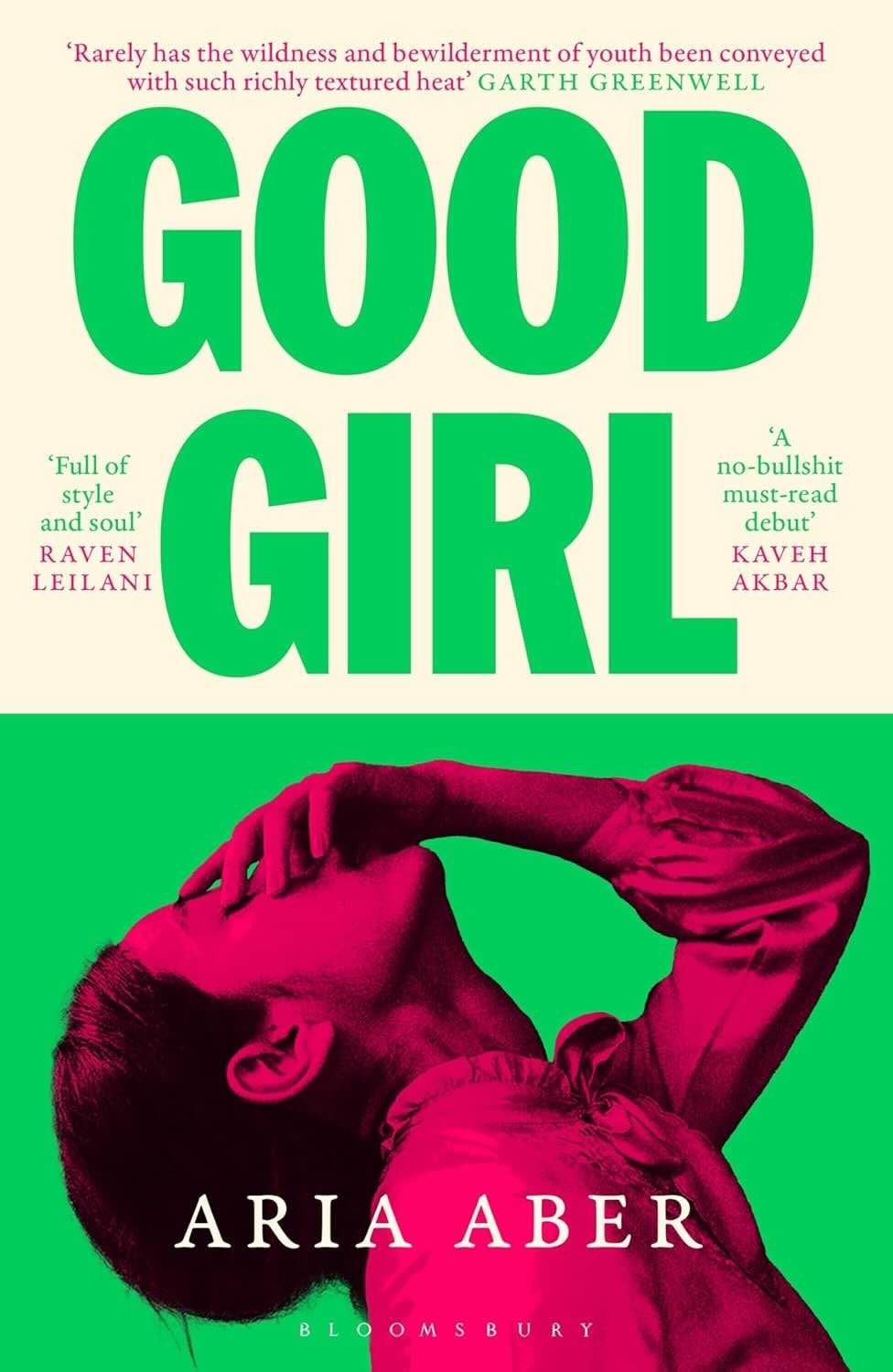
Good Girl - Aria Aber

The Safekeep - Yael van der Wouden

Crooked Seeds - Karen Jennings

The Dream Hotel - Laila Lalami

 I've read eleven of the sixteen and I'm confident that I will love Strout's latest.

 Briefly, my moany bit: what isn't on the list?  I recently listened to a roundup of 2024 books by a popular podcaster. Julia Armfield's Private Rites was their 'Most Disappointing of the Year': "all atmosphere" apparently. Now I could label this person an idiot and vow never to listen again or I could accept that everything is subjective when it comes to reading opinions. I'll let you guess which path I'm taking. Three other extraordinary books that would have made my longlist would be The Alternatives by Caoilynn Hughes, Susan Barker's Old Soul and Michelle de Kretser's Theory and Practice, even before I discussed Erdrich, Savas, Shafak, Kushner, Rooney and more. A greater infusion of speculative elements would have helped the list to feel even more relevant.

I cannot speak for Dream Count, Amma, Somewhere Else and The Persians. My book budget only goes so far despite being a thoroughly irresponsible and spendthrift individual, and none are yet available from my public library. Moreover I'm not prepared to buy Adichie's books at the moment. Her comments on trans women are ill considered at best.

Briefly the books I've left out: Birding is two thirds of an exceptional novel. The writing is SO exciting. I appreciated its rage, love and finesse and I also felt thoroughly seen: Lydia is a fantastically realised character  Nesting won me over completely despite my struggle with most social realism. On one hand the world is ALL the social realism I need and I also wonder if Ken Loach's well-meaning but preachy recent filmography has broken me. I suspect both novels will help a lot of women feel seen, understood and cared for: I hope a little bit of their courage and understanding will help me to fight this stupid world with renewed strength.

A Little Trickerie is hugely enjoyable, original and will get you thinking imaginatively about all sorts. If Crooked Seeds doesn't make it on the shortlist then I think I'd like it to be A Little Trickerie.

Fundamentally is a little disappointing. It is very funny in an acute, astringent kind of way especially when it throws barbs at all the cruel ironies of bureaucracy, corruption and colonial power. It's just a little too smug and broad. I don't generally enjoy novels that mix the sensibilities of popular fiction and literary fiction: they feel all askew and self-congratulatory, relying too much on plot. Others will enjoy and appreciate the voice of Nadia much more than me I'm sure.

Finally if I were thirty years younger I would have fallen in love with The Artist but I've seen it and read it before, and they were too many moments that felt manufactured.


The Shortlist


I'd read Bradley and van der Wouden last year. I hear folks - mainly 'literary fiction' readers - saying how much they 'enjoyed' The Ministry of Time but they say it with a small 'but' in their voice, a tone of condescension, as though it has little to say. It has a great deal to say and it does so artfully, with unusual sophistication and urgency. With The Safekeep I fell completely in love and unlike others, my devotion has endured and deepened through a second reading. 

I can understand why some readers are put off by All Fours: there is an undeniable whiff of privilege about it and clearly some people have been put off by some of its explicit content (just read some of the reviews on Goodreads!). I found it revelatory and wise - not about sex or desire particularly, but about life, the universe and everything. Crooked Seeds is like a literary palate cleanser - weird for me to claim that about a book that is so dark but it's almost a bit old-fashioned. I had flashbacks to reading Nadine Gordimer thirty years ago. Anyway, it's electric. 

I've only just finished The Dream Hotel and I'm still mulling it over. It's a very comprehensive book, which is obviously damning with faint praise: if you are thinking about the world critically and imaginatively then you’re going to find lots of your thoughts and questions in this book. Very little fiction can match up to the shock and horror of 2025 so what Lalami has created may not feel…enough? Instead it's subtle and understated: she has created a great cast of characters AND, unusually, a work to help us think about solidarity whilst incorporating the climate crisis. I am fascinated to see what the speculative community make of it and what lit-fiction readers will get out of it.

The find of the longlist is undoubtedly Aria Aber's Good Girl. This is an extraordinary book. Read it slowly. Give yourself little breaks away from Marlowe. Remember you are reading a bildungsroman, that you are on a journey with Nila. Imbibe its wisdom, skill and passion. Let it fill you up.

Now to read more of the International Booker longlist. Solenoid, here I come.


The full list in alphabetical order by author surname is:

  • Good Girl by Aria Aber (published by Bloomsbury)
  • The Ministry of Time by Kaliane Bradley (published by Sceptre, Hodder & Stoughton, Hachette)
  • Somewhere Else by Jenni Daiches (published by Scotland Street Press)
  • Amma by Saraid de Silva (published by Weatherglass Books)
  • Crooked Seeds by Karen Jennings (published by Holland House Books)
  • All Fours by Miranda July (published by Canongate Books)
  • The Dream Hotel by Laila Lalami (published by Bloomsbury Circus, Bloomsbury)
  • The Persians by Sanam Mahloudji (published by 4th Estate, HarperCollins)
  • Dream Count by Chimamanda Ngozi Adichie (published by 4th Estate, HarperCollins)
  • Nesting by Roisín O’Donnell (published by Scribner, Simon & Schuster)
  • A Little Trickerie by Rosanna Pike (published by Fig Tree, Penguin General, Penguin Random House)
  • Birding by Rose Ruane (published by Corsair, Little, Brown Book Group, Hachette)
  • The Artist by Lucy Steeds (published by John Murray, John Murray Press, Hachette)
  • Tell Me Everything by Elizabeth Strout (published by Viking, Penguin General, Penguin Random House)
  • The Safekeep by Yael van der Wouden (published by Viking, Penguin General, Penguin Random House)
  • Fundamentally by Nussaibah Younis (published by Weidenfeld & Nicolson, Orion Publishing Group, Hachette)

Thursday, 2 September 2021

Clarke Award 2021

The Clarke Award is always one of my cues to catch up with the year's SF - along with Kitschies and Strange Horizons end of year round ups - but this year it has coincided with a return to reading after a 13 month COVID/depression draught. As you might imagine I've been a bit high on it.

This is not an in depth analysis. My brain is only just beginning to wake up. It's more, an encouragement to read, think and share and a smiley burst of enthusiasm for the world.


Why the Clarke? Why not the Hugo or the Nebula or the BSFA? Because when I started reading SF consistently I discovered Adam Roberts' shortlist analysis on Infinity Plus, then the analysis on Strange Horizons and more recently the Sharkes. I no longer think of the shortlist as trying to represent the best of SF for the year and I no longer get annoyed or harbour feelings of injustice about books I feel passionately about that don't make the shortlist. I was once overly impolite about a book by an author I admire greatly during one of these roundups and still feel guilty. I still think bad books should be criticised, especially reactionary ones, but not mediocre ones that get some life and light through their shortlist spotlight. And having never served as a prize judge I'm not privy to the pressures and the compromises that must be part of the process.

I've read 22 out of 105 of the books on the submisions list: Agbabi, Arnott, Bradley, Charnock, Cook, DeLillo, Harrison, Hughes, Jimenez, Johnson, Kelly, MacInnes, McAuley, McKay, Pinsker, KSR, Schweblin, Solomon, Tchaikovsky, Tidhar, Valdes & Whiteley. I will definitely get to Jingfang's Vagabonds, the only book on the shortlist I've haven't read yet, in the next week or so. At some point I'll read Bear, Gibson, Hinton and Jemisin but maybe not before the prize is announced - I'm anxious to read some of the books on the Booker longlist in September. 

I should also say that I started by reading last year's winner, The Old Drift at the start of the summer and I snook in Hurley's The Light Brigade, Ling Ma's Severance and Susanna Clarke's Piranesi. I loved them all and are perhaps my measuring stick for what 2021's Clarke texts have to offer. 

First the shortlist, I read Agbabi's The Infinite when it was published for school and have been recommending it to our students ever since. Valdes' Chilling Effect was one of the first novels I read and was ideal for the exited-to-be-reading-again-me - generic and fast paced, like an episode of Firefly. McKay's The Animals in That Country is a very fine, ambitious novel and I'm glad more people might read it: I admired it more than I loved it but I admired it a LOT. The Vanished Birds is also well worth reading - I enjoyed its melancholy and its grim trajectory. It also feels very thin in terms of characterisation and that meant, for me, the impact of its politics and atmosphere was diminished. R B Kelly's Edge of Heaven has its heart and its politics in the right place but I disliked its laboured style - detail in all the wrong places - and I found it hard to care about the characters or the plot. You will find plenty of reviews on Goodreads and elsewhere that champion these books so don't be put off by my lukewarm appraisal. We all like different things and yes, clearly I'm going soft in my old age....

So how would I decide on a personal shortlist this year? Which books did I enjoy the most? Sarah Pinsker's A Song for a New Day, despite its troubling, prescent storyline is like a REALLY long hot bath with candles and a rubber duck. It's clever, subtle, hopeful and lovely. I read it in a day. I seem to love every book Lavie Tidhar writes and By Force Alone was no different. I've already written about it briefly (https://dancingonglass11.blogspot.com/2020/03/by-force-alone-random-thoughts.html) and even though I enjoyed it in ways I'm not sure Lavie would appreciate...I don't care :-) James Bradley's Ghost Species is tender and beautiful;  Rivers Solomon' The Deep is vivid, powerful and moving; War of the Maps has all the usual McAuley magic; as does Anne Charnock's Bridge 108: Aliya Whiteley's Greensmith IS funny but its also wonderfully weird and full of compassion (I think it's my favouite Whiteley and that says a LOT) whilst Martin McInnes Gathering Evidence is cerebral and exciting in all the right ways (I may well now try Infinite Ground again - I found its density cloying and unrewarding the first time around).

Mike Harrison's The Sunken Land Begins to Rise Again is the only book I've read twice so far. As usual, images spring into my brain unbidden and I find myself reflecting on it at the weirdest times. And as usual, I don't understand all the things that are going on but that's part of the joy! It's already won the Goldsmith's prize. I don't love it like I love the Kefahuchi Tract trilogy or some of the short stories but then, I don't think I'm supposed to. 

Clearly, many writers are thinking about the near future. I'm fascinated by the politics of it all and how they envisage our climate crisis turning, much sooner than we thought, into climate hell. Some authors seem to favour the worst of evolutionary psychology or an inability to throw off capitalism's selfishness and stupidity, whilst others give us the hope of say, Solnit's A Paradise Built in Hell, in their imaginings. I'm interested that Diane Cook's The New Wilderness found a place on last year's Booker shortlist. Will other (better?) books with a SF component follow? [It IS an interesting book btw with two fascinating protangonists - even if some of the other characters are cliches or way too thin]

A few words on Rian Hughes' XX. It is, at nearly 1000 pages, too long. It is almost obnoxiously clever: it has an annoying main character - another one of those neurodiverse geniuses; it has some facile politics, as though the author had been reading too much Anne Applebaum; it badly misjudges some of the sections where it tries to replicate news reports or other media and a couple of imaginary interviews featuring ultra-left lefties are monumentally stupid. A decent editor should have insisted on some rewrites and reimaginings. And yet, I really enjoyed it! It's a LOT of fun, it has a lot of ideas and is full of ambition. I loved debating with it and disagreeing and rethinking. I've already lent it to a friend. 

And then there is The Ministry for the Future..... Does KSR need even more exposure? Do I think it is too hopeful? (Yes) Do I think it sidesteps important questions? (Yes) Do I think people should be encouraged to read it and debate it and explore/research the ideas and politics anyway? (Yes) I should also say that, unlike others, I found it incredibly readable and I wanged through it in a couple of days.

Honestly, there's no book that I regret reading and most of them I enjoyed a great deal. Also, I wish I could remember my response to Samanta Schweblin's Little Eyes more clearly but it's a good 15 months since I read it! I know I liked it a lot though.

And so my shortlist? What would I read again? What would I want to discuss? What would I want others to discuss? What would I want people to discover? And yes, what did I love?
Ghost Spcies - James Bradley
Gathering Evidence - Martin McInnes
The Ministry for the Future - KSR
The Deep - Rivers Soloman
Greensmith - Aliya Whiteley

....with a final spot for Pinsker, Johnson (The Space Between Worlds has already won a Kitschie Tentacle) , Schweblin or Lingfang. Lolz - 6 is never enough! 

Tom Hunter enthuses about the shortlist on 5 Books here: https://fivebooks.com/best-books/the-best-science-fiction-of-2021-the-arthur-c-clarke-award-shortlist-tom-hunter/ 

You can get the full submissions list plus a look into the current state of SF publishing in terms of diversity here:
https://clarkeaward.medium.com/

A shout out to Nina Allan, Adam Roberts, Abigail Nussbaum and Steven Shaviro who continue to blog and of course Strange Horizons for intelligent, questioning analysis week in week out. They all inspire me to keep engaging however difficult it gets.


Thursday, 6 May 2021

April films 2021

I’ve watched 43 films, 28 directed by men and 15 directed by women (basically I’m trying to make sure a third are directed by women each month). 14 are rewatches – definitely a 2021 and beyond determination to rewatch films a LOT more.

This year’s awards bait has proved to be hugely disappointing – Minari, Promising Young Woman, Sound of Metal and Black Bear do not represent the wonderful year of movies that 2020 produced. Nomadland, I admired a lot and of the best film contenders in the Oscars and Baftas it would have got my vote too….though I would have included Never Rarely Sometimes Always, Rocks, Miss Juneteenth and others in my shortlists. 

Disappointments? Quite a few I’m afraid but especially Carpenter’s Escape from New York. I DO NOT understand how this is a cult film. Also, Ratatouille = BORING! Also, Moulin Rouge is NOT the film I remembered ☹

Loves? Ammonite – destined to be underrated I fear, and Catherine Corsini's Summertime. Obviously, I try to search out and champion films directed by women but I’ve arrived at the stage, fairly seamlessly, where female directors are making most of my favourite films – this month I went back to Debra Granik, Kelly Reichardt, Jane Campion and also discovered Ildikó Enyedi. Asian cinema continues to provide me with a well of rich, meditative films - Hou Hsiao-hsien’s Café Lumiere was probably my pick of the bunch this month; I’m continuing my journey through exploitation and this month and tried Jean Rollin and Walerian Borowczyk with mixed results. However, Borowczyk’s Blanche is FUCKING GLORIOUS and now I’m wondering whether I should check out his mid-70s erotica too. Weird but true.


I listen to quite a few podcasts to send me off to sleep and I tried Jack Howard’s The Screen Test where he and guests pits three films against each other to decide what’s best. I’m not sure why I did this because I don’t really like Jack Howard and I think the idea is pretty stupid but hey. In this episode he pitted the latest A Star is Born v La La Land v Whiplash. No brainer right? A Star is Born wins every time! Apparently not. So I watched all three again and, who knew? A Star is Born wins hands down 😊 Also, Damien Chazelle, on reflection and without all the hype, turns out to be a reactionary asshole wasting whatever talent he might have. Who knew?

Great performance in a mediocre film? Katherine Hepburn in David Lean’s Summertime (1955)

Feminist Friday: The Piano & Mouthpiece OR Ammonite & Summertime (2015)

Weird Wednesday: Viy and Blanche 

Chill-the-fuck-out Saturday night: Palm Springs & Space Sweepers

And have you seen the new Verhoeven trailer for Benedetta (https://www.youtube.com/watch?v=n-31QJXV3iA) – a Verhoeven lesbian nunsploitation film – sorry to make it sound so sleazy – but, yeah, can’t wait.

Short reviews for all films on Letterboxd: My profile on Letterboxd https://boxd.it/ayRp

1. Full Moon In Paris (1984) (Éric Rohmer)
2. Space Sweepers (2021) (Jo Sung-hee)
3. Friday Foster (1975) (Arthur Marks)
4. Ratatouille (2007) (Brad Bird)
5. Viy (1967) (Konstantin Yershov and Georgi Kropachyov)
6. The Nude Vampire (1970) (Jean Rollin)
7. The Shiver of the Vampires (1971) (Jean Rollin)
8. Whip It (2009) (Drew Barrymore)
9. The Piano (193) (Jane Campion)
10. Begin Again (2013) (John Carney)
11. Starship Troopers (197) (Paul Verhoeven)
12. Real Women Have Curves (2002) (Patricia Cardoso)
13. Moulin Rouge! (2001) (Baz Luhrmann)
14. Palm Springs (2020) (Max Barbakow)
15. Minari (2020) (Lee Isaac Chung)
16. Christmas in August (1998) (Hur Jin-ho)
17. Ammonite (2020) (Francis Lee)
18. Requiem for a Vampire (1971) (Jean Rollin)
19. A Star is Born (2018) (Bradley Cooper)
20. Summertime (2015) (Catherine Corsini)
21. My Twentieth Century (1989) (Ildikó Enyedi)
22. Love and Monsters (2020) (Michael Matthews)
23. Wendy and Lucy (2008) (Kelly Reichardt)
24. Meek’s Cutoff (2010) (Kelly Reichardt)
25. Imagine Me and You (2016) (Michael Tuviera)
26. Possession (1981) (Andrzej Żuławski)
27. The Strange Case of Dr. Jekyll and Miss Osbourne (1981) (Walerian Borowczyk)
28. Café Lumiere (2003) (Hou Hsiao-hsien)
29. Summertime (1955) (David Lean)
30. Escape from New York (1981) (John Carpenter)
31. Blanche (1971) (Walerian Borowczyk)
32. Promising Young Woman (2020) (Emerald Fennell)
33. Black Bear (2020) (Lawrence Michael Levine)
34. Sound of Metal (2019) (Darius Marder)
35. Strange Days (1995) (Kathryn Bigelow)
36. Winter’s Bone (2010) (Debra Granik)
37. Mouthpiece (2018) (Patricia Rozema)
38. Leave No Trace (2018) (Debra Granik)
39. La La Land (Damien Chazelle)
40. On Body and Soul (2017) (Ildikó Enyedi)
41. Somewhere (2010) (Sofia Coppola)
42. Whiplash (2014) (Damien Chazelle)
43. Queen and Slim (2019) (Melina Matsoukas)

Monday, 5 April 2021

March films 2021


I watched 42 films in March, 26 by men and 16 by women with 11 rewatches. For some reason my French, US and Japanese intellectuals are interspersed with all kinds of horror, sleaze and exploitation cinema from all over the place. Lockdown is clearly interfering in my usual encounters with perversion and desire – lol, I wish. 😁


Lows? Josie and the Pussycats, Russ Meyer

Highs, keeping me vaguely sane? Mia Hansen-Løve (rewatched all of them, reinforcing my admiration and love), Miranda July, SHOWGIRLS, Mädchen in Uniform, Shunya Ito and Meiko Kaji, Éric Rohmer. My favourite bit of knowledge was learning in Adam Naman's It Doesn't Suck that Mia Hansen-Løve loves Showgirls. First viewing for me and straight into my favourite films of all time.

Feminist Friday: Mädchen in Uniform & Female Prisoner Scorpion: Jailhouse 41

Weird Wednesday: The Wicker Man & The Future.

Super Showgirls Saturday: Eden, Showgirls & You Don’t Nomi.
Sublime Sunday: The Green Ray & Pauline at the Beach.

1. California Suite (1978) (Herbert Ross)
2. Ginger Snaps (2000) (John Fawcett)
3. All is Forgiven (2007) (Mia Hansen-Løve)
4. Let the Right One In (2008) (Tomas Alfredson)
5. About Some Meaningless Events (1974) (Mostafa Derkaoui)
6. Father of My Children (2009) (Mia Hansen-Løve)
7. Eden (2014) (Mia Hansen-Løve)
8. Once (2007) (John Carney)
9. Little Woods (2018) (Nia DaCosta)
10. Moxie (2021) (Amy Poehler) 
11. Things to Come (2016) (Mia Hansen-Løve)
12. Mädchen in Uniform (1931) (Leontine Sagan)
13. Crossing Delancey (1988) (Joan Micklin Silver)
14. Sing Street (2016) (John Carney)
15. Air Doll (2009) (Hirokazu Koreeda)
16. Hospital Massacre (1981) (Boaz Davidson)
17. Josie and the Pussycats (2001) (Deborah Kaplan & Harry Elfont)
18. The Aviator’s Wife (1981) (Éric Rohmer)
19. Female Prisoner #701: Scorpion (1972) (Shunya Ito)
20. The Blood on Satan’s Claw (1971) (Piers Haggard)
21. WandaVision (2021) (Matt Shakman)
22. The Wicker Man (1973) (Robin Hardy)
23. The Slumber Party Massacre (1982) (Amy Holden Jones)
24. Showgirls (1995) (Paul Verhoeven)
25. Vixen (1968) (Russ Meyer)
26. You Don’t Nomi (2019) (Jeffrey McHale)
27. Blind Woman’s Curse (1970) (Teruo Ishii)
28. Supervixens (1975) (Russ Meyer)
29. Total Recall (1990) (Paul Verhoeven)
30. Flesh + Blood (1985) (Paul Verhoeven)
31. A Good Marriage (1982) (Éric Rohmer)
32. Daughters of Darkness (1970) (Harry Kümel)
33. Female Prisoner Scorpion: Jailhouse 41 (1972) (Shunya Ito)
34. The Green Ray (1986) (Éric Rohmer)
34. Pauline at the Beach (1983) (Éric Rohmer)
35. The Future (2011) (Miranda July)
36. Me and You and Everyone We Know (2005) (Miranda July). 
37. Fascination (1979) (Jean Rollin)
38. But I'm a Cheerleader (1999) (Jamie Babbit)
39. You Were Never Really Here (2017) (Lynne Ramsay)
40. Frankenhooker (1990) (Frank Henonlotter)
41. American Honey (2016) (Andrea Arnold)
42. Booksmart (2019) (Olivia Wilde)