Thursday, 7 August 2014

A few words on the Coen Brothers


   I’ve enjoyed most of their films and Blood Simple, Fargo, Miller’s Crossing, Barton Fink, The Big Lebowski, No Country for Old Men, True Grit and Inside Llewyn Davis are the ones I can happily watch again and again.

   Watching Miller’s Crossing again the other night reminded me of Will Self’s article in the Guardian a few years ago. At the time I seem to remember it wound me up but now I don’t see too much wrong. The films aren’t great, like those of Tarkovsky or Kiarostami are great but they’re good in interesting ways. It’s not that Self misses the point, he focuses correctly on their reflexivity—that they make films of films and films about films. It’s more that when so much modern culture of a knowing, ironic persuasion can feel empty and somewhat inane, the Coens’ films are straightforwardly pleasureable—Deakins’cinematography, great performances, apposite, ambiguous and humorous soundtracks often with Carter Burwell’s beautiful scores and great production design. Their reflexivity also acts to question tropes, expectations and the viewer's relationship with cinema in a ‘moderately clever’ and discursive way.

I’ll quote this excerpt that focuses in on True Grit:

On the face of it the Coens have made as straight and authentic a remake as is imaginable, the dialogue is crisp and with its idiosyncratic mixture of idioms – Victorian-portentous spliced with rangy slang – oddly convincing. Deakins has also put his quirky lens away in its box and done his best to shoot straight – just like Rooster Cogburn.

But when all's said and done, you have to ask yourself, why? This isn't a western nouveau to join the reinvigoration of the genre that began with Clint Eastwood's The Outlaw Josey Wales (1976) and has continued through to Andrew Dominik's magisterial The Assassination of Jesse James by the Coward Robert Ford (2007); this True Grit says nothing more substantive about the role of Manifest Destiny in American self-conception (which is what, in the final analysis, all serious westerns are about) than the last one did; rather, I couldn't help feeling that somewhere in the Vulcan mind-meld of their creative sensibility, the brothers embarked on this project purely and simply as a vehicle for Bridges. And in as much as it was vehicle for Bridges, in a queered way True Grit is a companion piece to The Big Lebowski.

Think on it: in Lebowski Bridges plays a slacker whose very inanition helps him to rise above the nefariousness of all around him; while in True Grit he plays a man of action whose machismo functions in the same way. The two Jeff Bridges characters are in fact Janus-faces of the same, uh, actor. This, again, leads us back to the Coens' central problem: their reflexivity as directors, making films of films rather than films tout court. Still, in our benighted age, when films about amusement park rides and electronic fidgets scoop the honours, perhaps Hollywood redux is the best we can hope for.


   Lots to agree with here but what the film does, simply and brilliantly, and what Self doesn't seem to get is how True Grit shows the appeal of Rooster, LaBoeuf and Mattie—their principles, bravery, determination, charisma, self-belief whilst still managing to show how these traits can also be harsh, unappealing and unrelenting, and how they so easily translate into reactionary conclusions and actions. Compare it with the 1969 original, (a film I still love btw—Wayne, irascible and charismatic, the title song by Glen Campbell and those gorgeous autumnal colours) to find a very straightforward film, free of any kind of critique and nuance.


   Miller’s Crossing offers a slightly different kind of reflexivity. The film acknowledges and plays with many of the ideas and motifs common to gangster films and noir. Gabriel Byrne’s Tom is a seemingly a classic noir anti-hero. He’s the smart man behind the scenes, talking sense to ruthless mafiosos and psychopaths; he’s also a drinker, not much of a fighter—he takes countless beatings, and cool, in a downbeat, existential kind of way. We route for him perhaps only because the characters around him are even more deranged. We route for him too as we tend to do with all central characters—because its irresistible and because its part of the logic of narrative that we’re all so used to. He’s the movie equivalent of an unreliable narrator and as with many of the best violent thrillers the viewer becomes complicit in the dubious pleasures on offer. The violence is operatically staged and beautifully seductive. The scene when Albert Finney’s Leo guns down his would-be assassins compares favourably with the most sublime slices of movie violence ever staged - even the bar scene in Corbucci's Django. Those with weak minds—like me—will also leave the movie desperate for a slug of bourbon, a filter-less cigarette and a new suit.


   Nothing new then? Well not really, but it’s the panache with which it’s pulled off and it’s profound understanding of how movies work—the appeal of glamour, spectacle, violence, nostalgia, intelligence and that deep, deep desire to identify with others—that make it so good. The film incites a constant dialogue in your head. You explain away Tom’s behaviour because you yearn for him to have a shred of decency but slowly and surely the film forces you to face the truth, even before the final denouement. He’s the worst kind of bastard after all—he wants to keep the status quo, keep the slightly saner hoods in control and he’ll go to any length to do it.

   That he understands love and loyalty makes it all the worse.


Tuesday, 3 June 2014

May films

   Most Hollywood comedies are crap so when Henry Barnes gave Bad Neighbours 4 stars in the Guardian I went along. [sighs] I watched it all the way through and laughed a couple of times near the end when the two main characters have a fight - funny like The Three Stooges, but for the most part its fairly dull and embarrassing. 

    Seth Rogen, Rose Byrne and Zac Efron just about keep you watching  At least its not as offensive as many of them - Ted anybody? On the other hand Blue Ruin got a 'meh' on the Guardian film show but it's tense and compelling throughout. I can't wait to see Lukas Moodysson's We Are the Best and Lenny Abrahamson's Frank again on Blu-ray - they are I suspect minor gems.

   Two eminently watchable blockbusters in Godzilla and X-Men: Days of Future Past and Maleficent was rather good too: could Hollywood actually have a decent year?

   Katell Quillévéré's Suzanne was every bit as good as I hoped and I finally got round to watching Jessica Hausner's Lourdes, Takashi Miike's 13 Assassins, Clio Barnard's The Arbour and Ben Wheatley's Kill List.


   I rewatched Dilwale Dulhania Le Jayenge and Jab We Met one Sunday afternoon (with a hangover) to celebrate my first year of Bollywood.

   And I seriously need to discuss Ulrich Siedl's Paradise trilogy with someone over a pint! Faith may be one of the most unpleasant films I've ever seen yet all three films have stayed with me.

Hopefully June won't be quite so busy and I'll be able to write some reviews.

At the cinema
  • The Muppets Most Wanted
  • Bad Neighbours
  • We Are the Best

  • Blue Ruin
  • Frank
  • Godzilla
  • X-men

  • Maleficent
On DVD/Blu-ray
  • An Autumn Afternoon (1962)
  • Suzanne

  • Jab We Met (2007)
  • Dilwale Dulhania Le Jayenge (1995)
  • Kill List (2011)

  • Hum dil de chuke sanam (1999)
  • The Wrestler (2008)
  • Circumstance (2012)

  • 13 Assassins (2011)
  • Lourdes (2009)

  • Elena (2012)
  • The Arbour (2010)
  • Paradise: Love (2013)
  • Paradise: Faith (2013)
  • Paradise: Hope (2013)

  • Peepli Live (2010)
  • In the Loop (2009)


Thursday, 15 May 2014

Cuckoo Song (Part Deax) and more.

   Cuckoo Song

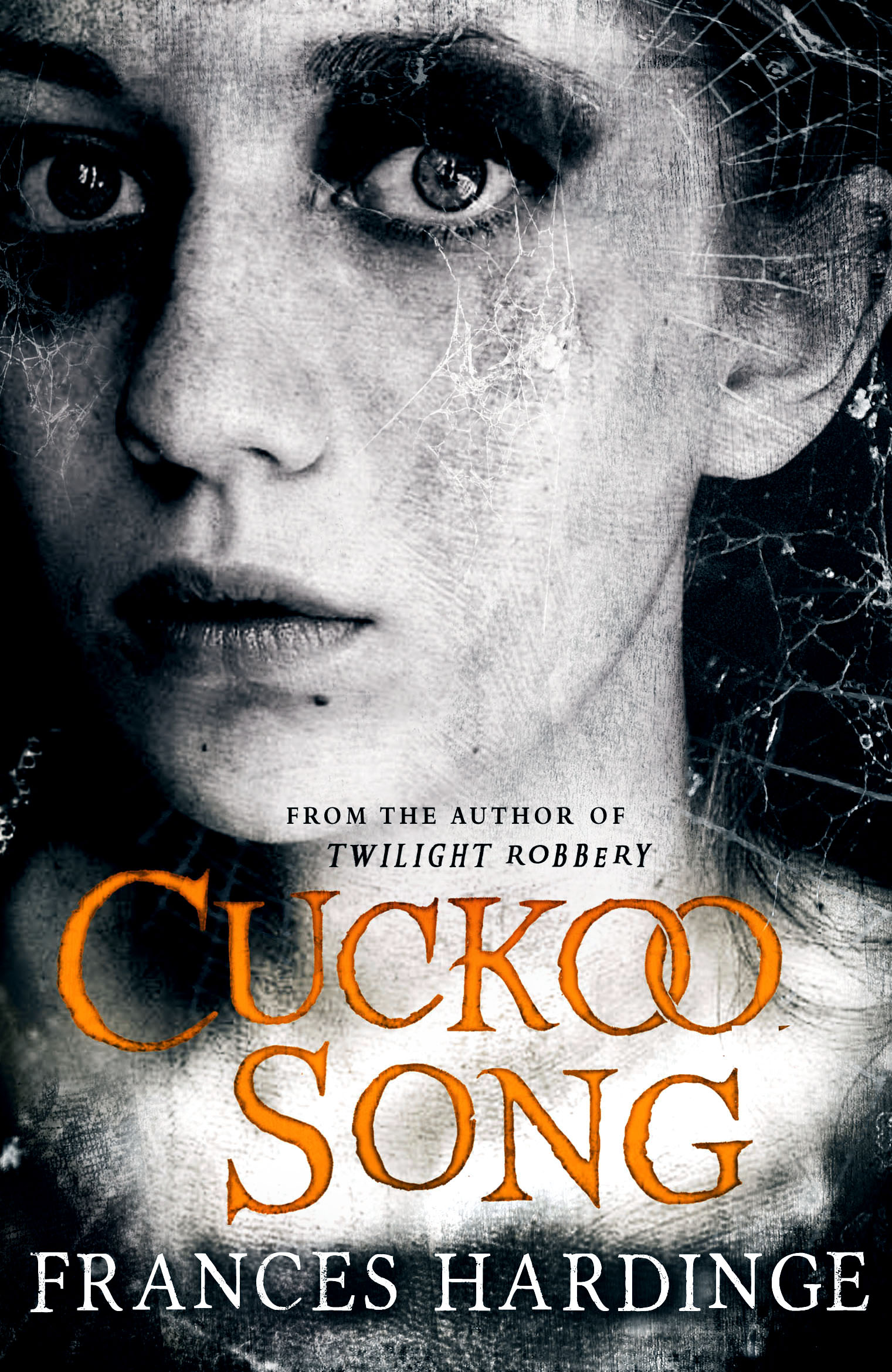
It's now out and though I may, for a brief spell, come across as Frances Hardinge's unpaid publicist I hope it does really, really well. Will their be a better YA novel published this year? Nah! Go buy it and then take the day off to read it.

CuckooSong - cover art
  There are excellent reviews at The Book Smugglers and at things mean a lot  and others cropping up all over the place. Special thanks to Ana because my review of Cuckoo Song is my most-read post so far. 

  Frances has done a blog tour - all the details are up at her website here. It's well worth searching out the links for all kinds of fascinating insights.


   Reviews

   There's a review of Long Hidden: Speculative Fiction from the Margins of History at Strange Horizons - looks like a must-read.


   Other stuff


   Please try to read Maureen Kincaid Speller's fine essay, They Are Not Ghosts: On the Representation of the Indigenous Peoples of North America in Science Fiction & Fantasy.

   And on Twitter it's well worth keeping track of #readingwomen2014. I already tend to read more books written by women anyway but actually keeping track is interesting. I'm already ahead of the game and reading the Bailey's shortlist will help even more. 
  
   Christopher Priest has done a series of Q&As – he links to them on his website here

   There are so many literary prizes these days to keep track of, but the Miles Franklin award looks to have some interesting works this year. The Guardian link is here. 

    It’s easy to feel a little apocalyptic about the world right now. You could always just about convince yourself that world leaders wouldn’t blow us all up with nuclear weapons but it’s hard to believe that accelerating climate change mixed with astounding levels of corruption and inequality mixed with the inexorable march of free market capitalism aren’t going to make the world much, much worse fairly soon – and it’s bad enough for billions of people already. Hopefully this is something that will increasingly impact on the content and structure of literary fiction. This post by Alison Flood entitled ‘Which books will survive rising sea levels?’ is worth a read.

   Thanks to Roger at Beccon Publications for sorting me out with a copy of Paul Kincaid's Call and Response and a PDF of What we do when we read Science Fiction.

   Also I've finally found the Notes from Coode Street Podcast - the most recent is with Joe Abercrombie and I've also listened to the ones featuring Nicola Grifith and M John Harrison. It's a brilliant resource - entertaining, erudite and sharp.


Wednesday, 7 May 2014

April reading - the brilliance of Eleanor Catton and Jane Gardam


   I read three very good novels in April: The Luminaries, Old Filth and The Adjacent. I’ve also read some mediocre stuff too. These days when I read a bad or middling book I either stop reading or, if I carry on to the end, almost instantly forget about it. However joining Netgalley (and writing this blog) means I’m kind of committed to writing about the bad stuff too and to finish the odd book I normally wouldn’t bother with. Here I would guess that my tolerance for slightly less than exceptional ‘literary’ fiction and speculative fiction is slightly higher than for other genres but not by much. I also appreciate that we all draw our own lines, often based on education, opportunity, stress and tiredness and, that many people read to relax, ‘escape’ etc. I haven’t read to escape since I was a teenager so I tend to be a little (too) severe sometimes on those that do and on novels that are ordinary or worse.

  It’s difficult because I don’t want to belittle people’s hard work, their achievement in getting published and living their dream. Commenting on the banality of a novel seems harsher somehow than lambasting the latest blockbuster or wishing that aliens would kidnap J J Abrams.

   Secondly I became a school librarian because I wanted to share my love of books (and films, etc), not because I particularly enjoy reading YA novels – many are commonplace or desultory (just as most ‘adult’ novels are), the marketplace is saturated with series and often follows current fashion too – thus dark romance and dytopias. That doesn’t mean I discourage our students from reading anything – on the contrary, I encourage them to read anything and everything. But even reading the Carnegie shortlist is onerous and unsatisfying for me - though the payoff is in the discussions you can have with the kids.

   The bottom line of this boring, liberal apologia is this – severe though it may be. Unless a novel has invention, accomplished writing, interesting structure and something interesting to say – with some metaphorical reach and vibrancy, I think it needs to be consigned to the YA section of the library. Nor do I have sympathy with adults who want to read masses of YA fiction - unless it’s their job. I do understand the occasional draw of nostalgia – I can still just about watch Stars Wars and inhabit my 6-year-old self to feel safe and full of wonder. I even reread the Dragonlance novels once to feel that same feeling. I also understand the need to escape – wine, singing and the pleasures of Strictly Come Dancing I understand (all too) well, so I don’t disapprove of a bit of mindless entertainment. BUT, on the whole, there are SO many books and films out there that are entertaining AND stimulating that it hurts a bit somehow, when they don’t get sought out. I appreciate this will offend those who think escapism is a perfectly legitimate pursuit and cause some to proclaim me a culture fascist. I’m not – on the whole I keep any grumpiness that surfaces to myself but I’m giving fair warning that from time to time I will get disappointed when I see mediocrity getting too much praise.

And so, onwards.

The Luminaries


Image of The Luminaries     I loved reading The Luminaries. I haven’t read all of last year’s Booker shortlist yet but it’s hard for me to imagine that there was a better book than this. I’m not sure if I have a review in me, I’ll see. For now the best review is by Julian Novitz in the Sydney Review of Books. I like David Hebblethwaite’s insights and you can read some useful articles in the Guardian though I think Kirsty Gunn’s review is wrong-headed. This short piece by Robert MacFarlane, the Booker chair (and one of the most gifted writers in Britain today), is also very useful for gaining a better understanding of the novel, as is this piece by his fellow Booker judge Stuart Kelly. I’m glad I choose to read it during my Easter break. I need to read books, especially lengthy books, in a relatively short period of time so I can stay immersed and feel that I’m making connections and reading critically. I read it over four days, culminating in an exhilarating 300-page mad dash to the finish. The novel gets easier to read as it progresses – the first section (360 pages) has a density that requires focus, especially as it is in a style to which you may not be used to - unless you regularly return to 19th century classics. There are lots of things to love about it - I love frontier tales that get to grips with the greed and lies, the prostitution and the racism, the hypocrisy and the corruption regarding ‘birth of nation’ myths. The Luminaries does so magnificently and I loved the way that Anna’a character is the mysterious centre of the first half of the novel but increasingly comes into focus during the second half. I loved the quality and the intricacy of the writing and Catton’s intelligence and sagacity. I loved the mystery and the romance.


Old Filth

Cover of Old Filth by Jane Gardam   I’d never read any of Jane Gardam’s work before but when Last Friends made the Folio Prize shortlist I remembered I’d meant to read Old Filth years ago. The novel is very much about the end of Empire, about memory and growing old and about how the experiences of childhood shape and constrict our character and behaviour. It does so by asking us to empathise with people of the upper middle class – people I’d normally find it impossible to empathise with – but Gardam also exposes their privilege and absurdity with great subtlety, humour and irony. Gardam is wise and clever whilst the tone and structure of the novel are sometimes troubling and disorientating but also deeply pleasurable. I’ve gone straight into The Man in the Wooden Hat (rather than getting cracking on the Bailey’s shortlist - aaahhh!!) and will write more when I’ve finished all three.

The Clarke Award

   I also finished the Clarke shortlist, though in truth I didn’t finish two of the novels.  As I’ve already written,  I don’t think those two novels are up to ‘shortlist quality’ – whatever that means, but I do appreciate what a difficult job it must be to read over 110 novels in short space of time. I couldn’t do it. Adam Roberts’ comprehensive 2-part review of the shortlist is now up at Strange Horizons. It’s as brilliant, as funny and as provocative as ever and congratulations to Ann Leckie on her win.

Sue Townsend

   I was sad to hear about the death of Sue Townsend so one night I just curled up and read The Secret Diary of Adrian Mole. It made me laugh out loud and brought back memories of reading it as a teenager, and being a teenager. She is such a clever writer: I shall read more soon.

Fantasy or ‘how to win friends and influence people’

   Netgalley gave me the opportunity to read Trudi Canavan’s Thief’s Magic. We have copies of some of her other novels in the school library but I’d never read one myself and it’s hard not to notice her books in the SF and Fantasy section of Waterstones. I can only describe it as generic; you can see the experience and solidity that has gone into the writing and thus the novel has an effectiveness that can’t be denied: it’s easy to read and it takes its subjects - imperialism, the environment and gender, seriously. Unfortunately it’s not exceptional in any way and is rather transparent. 
   Next on my list was Emma Newman’s Between Two Thorns. I’d been put off by Gabriel Murray’s scathing review at Strange Horizons but I like her Tea and Jeopardy podcast so I thought I’d give it a go. I read it straight after the two Clarke failures and after Thief’s Magic so I was desperate for something good. Though I agree with quite a bit of what Murray writes I found Newman’s novel a little more interesting and the writing considerably better, than the three I’d just attempted to read and so I allowed myself to be charmed.  I don’t think her novel has much depth or resonance but I’d happily recommend it to a teenager.
   
   Damning with faint praise? Patronising? Possibly, but I did warn you.

Thursday, 1 May 2014

April Films


   A very good month of films. I loved almost all the films I saw at the cinema and indulged my passion for Cyd Charisse and Fred Astaire at home during the school holidays. I learned that Au Hasard Balthazar is definitelt NOT the 16th greatest film of all time and that Scorcese's New York, New York really is quite disappointing.

At the cinema
  • The Invisible Woman
  • Queen
  • The Lunchbox
‘The Lunchbox’ delivers a clever plot that never follows through
  • The Double
  • Captain America 2: The Winter Soldier
  • Calvary
Brendan Gleeson in 'Calvary'
  • Tracks
On DVD/Blu-ray

  • Roberta (1935)
  • Silk Stockings (1957)
  • The Band Wagon (1952)
  • Au Hasard Balthazar (1966)
  • The Gay Divorcee (1934)
"The Gay Divorcee" at Dansalona 2nd edition 2011 in Barcelona

  • Flying Down to Rio (1933)
  • Ulzanna's Raid (1972)
  • The East (2013)
  • Hummingbird (2013)
Hummingbird Review
  • Dedh Ishqiya
  • Short term 12 (2013)
A still from Short Term 12.

  • New York New York (1977)

Friday, 25 April 2014

Anger management - the BSFA awards and the Clarke

   I tried not to be grumpy but I haven’t managed it. Apologies in advance.


   As much as I love speculative fiction I still feel like an outsider – I still read more ‘literary fiction’, so when it comes to the awards season I tend to get a little frustrated and this year is no different. First, I should say that I don’t really take any notice of the Hugos but I can see that the fiction categories and film category (whatever it’s called!) are particularly awful. I watch the debates on twitter and don’t have any good answers for now so I’ll move on. The BSFA Awards were a weird mixture. I think Jeff Vandameer’s Wonderbook and Nina Allan’s Spin are brilliant and I like Ancillary Justice (more below) but the award for Ack Ack Macaque feels like an award for mediocrity – in terms of the quality of its ideas and its writing the novel is clearly inferior to the other four novels. I don’t understand it.


   Nor do I understand how Nexus or The Disestablishment of Paradise found their way on to the Clarke shortlist. I admire anyone with the discipline to finish either novel. I didn’t, life is WAY too short – they make Tim Powers’ Declare look like a masterpiece [2011 was the last time I read a whole shortlist, and yes, OK, apologies for the hyperbole]. Anyway, replacing those two with say Maddaddam, Strange Bodies or The Violent Century would have made it a very strong shortlist indeed. What a shame Kate Atkinson didn’t submit Life after Life too. People might reasonably accuse me of prioritising speculative fiction that blurs boundaries rather than core SF and I think that would be fair. Others might say that it’s all subjective – they’d be wrong.


   Who should win? I admire the ambition of Ancillary Justice and God’s War a lot though I enjoyed Leckie’s novel more and have too many issues with God’s War. For me it’s between Smythe and Priest and as much as I appreciate the boldness and sophistication of The Adjacent I hope The Machine wins. I read it in February, it’s still with me and I think it’s a great novel.


The Adjacent - Christopher Priest

   I finally got round to reading Christopher Priest’s latest, Clarke and BSFA Award nominated, The Adjacent. If you’ve never read a Priest novel I would urge you to give him a try: he has been writing good or great novels for over forty years. He’s won the BSFA Award four times and the Clarke once in 2002 with The Separation, and it was surprising when The Islanders didn’t make the Clarke shortlist in 2012. Christopher Nolan’s film version of The Prestige is good, but unsurprisingly, the novel is better. So how good is The Adjacent, and if I were a Priest newbie, would it be a good starting point? Maybe it would.


   First I’ll direct you to some other reviews. John Clute gets to the heart of Priest’s novel here, as does Paul Kincaid here and Adam Roberts here. I also like Paul Di Filippo’s review for Locus. They’ve all been reading genre fiction and Priest for much longer, and with greater focus, than I have so I would urge you to examine their insights.

  Priest’s prose sometimes gets criticised as functional and plain, and I can understand why but it’s misplaced. It is certainly never showy, and figures of speech are few and far between, but actually his prose is exact, crystal clear, fluent and deceptively nuanced. So the first thing to say is how easy and exciting The Adjacent is to read – you see and understand the action in Priest’s worlds perfectly even as you feel excited, uneasy, perplexed or contemplative. There are eight sections to the novel, sometimes written in first person, sometimes in third that evoke different moods, times and places seemingly effortlessly. Furthermore Priest teaches you how to read his novel. The first section depicts a future world in a state of dramatic geopolitical instability due to accelerating climate change but the second section is narrated by a stage illusionist Tommy Trent who meets H.G. Wells on his way to the allied front during WW1. Priest immediately directs the reader to start identifying themes, contrasts and comparisons, between his possible future and the past(s) he evokes, as well as differences in voice, register and style amongst the different sections of the novel. He also wants you to ask why – why jump to WW1 and what kind of novel is this that does so (especially when you realise that this is the only section to visit that era)? In the paragraphs that lay out Tommy’s stagecraft the reader is also reminded of the novelist’s craft and techniques of subtlety, misdirection and defamilarization and, as he listens carefully to Wells, Tommy admits “my own mind was racing on all sorts of adjacent subjects”. This is undoubtedly a novel of adjacent subjects.

   BUT, as I read back those last few sentences I wonder if I make Priest’s novel sound trite. Aren’t these the things good literature is supposed to do? I can only say that the experience of reading The Adjacent is a fecund experience full of pleasure and unease as you continually make connections, ponder their significance and try to make sense of their place in the text - whilst always testing out their emotional and rational ‘power’ and their relevance to the ‘real’.  
   You might also find yourself unconvinced with regard to the novel’s structure and cohesiveness. Are some of the sections too divorced from each other? How much sense does it really make? Does the novel accrue weight and significance or does it feel too much like a game or a puzzle? The Adjacent draws attention to itself as a fiction and is thus a metafiction (as are all Priest’s novels), but a very bold and showy kind of metafiction. The breaks between sections are dramatic and mystifying. On one level Priest is showing you that you can only make sense of the text by attending carefully to the complexity of its construction – I think Clute calls it a ‘God game’, yet paradoxically some of the most powerful sections are when Priest evokes the reality of the world wars, the bravery and adventure of Krystyna, and the power of nature. This tension accounts for much of The Adjacent’s success. Priest is also brilliant at landscapes and their mood: on more than one occasion I couldn’t help but think that it’s a strangely romantic and pastoral novel.

   Over the course of the novel two further things happen. First the sections in the future become more unsettling, strange and uncanny. The second is hard to quantify without some pretty rigorous textual analysis, but I think the language warms slightly, or to put it slightly differently the icy control of earlier sections loosens and thus helps the reader to embrace the finale.

   The Adjacent wants us to examine how we think about the world, to remember the past – the mistakes, the violence, the horror, but crucially to remember some of the saving graces in the face of that horror. The descriptions of environmental change in the future are brilliantly done, as are the descriptions of nature throughout the novel with which he invites comparison. That said I’d love to ask Priest about his future Britain because I think his Islamic Republic is a mistake, a bum note or a bad joke in a formidable symphony. I can easily imagine a Christian fundamentalism achieving hegemony in Britain or in other nations of the West as economic and environmental disaster precipitate change but the ongoing anti-Islamic propaganda in Britain makes it the most unlikely of futures imaginable. I have other issues but I don’t think I can resolve them without a second reading. For instance Priest brilliantly evokes the camaraderie and collective effort of the war years but I wonder if this is a little too romantic and the implications, conservative. Despite these doubts, and in part because of them, Priest’s novel is audacious, potent and quite brilliant.