Friday, 6 March 2015

Get your geek on and goodbye Spock


The death of Leonard Nimoy has had me remembering all kinds of stuff - mostly good. I'm not the geek I used to be - I fall asleep during Star Wars, I hate J J Abrams with a passion, blockbusters bore me and I can't be arsed to watch TV. Even Game of Thrones with its appeal to my Sword and Sorcery roots is irritatingly facile. Our school however is full of geeks - the love for Doctor Who, Merlin, Manga, Iron Man, Supernatural and ALL KINDS of stuff is omnipresent and it's always lovely to get caught up in their enthusiasm. I'm fully aware too, that my love for geeky stuff is a huge part of who I am, still. So in our next Bookworm the girls will be choosing their Geek Top 5. I've separated it out into 5 categories (see below) but you can mess around with that (if you must!). This is my 'old man' version:

Leonard Nimoy


 Over the years it becomes harder to separate out nostalgia, and the comfort it can bring, from things that have continuing relevance, meaning and quality. A bit of nostalgia is fine but too much is just another prolonged and very dull, escape from reality. I’ve tried to choose things that retain their bite. What’s that you’re saying?  Yes, yes, of course I know I’m pompous! Lol!


Favourite TV Series - The first episode of Blakes 7 was on BBC 1 on Monday 2nd January, 1978 at 6:00pm. I was 7. I was still very cute at 7 it has to be said. I’d go as far as to say I was adorable. Blakes 7 however was neither cute or adorable - it was dark and scary, seductive and serious. It is undoubtedly a central factor in making me the person I am - FAR more important than my parents, school or my friends. [I’m just gonna throw this kind of stuff in for a reaction—but sometimes I kinda believe my own nonsense too].  In the first episode a man called Blake is invited to a meeting for those discontented with the government. All the people at the meeting are massacred and Blake is set up, accused of molesting children, convicted, and sent to a penal colony. Bleak, huh? Yes, but it also has a dry, laconic humour and great, razor-sharp dialogue. And obviously it gets (a bit) cheerier. Blake escapes, along with a handful of other prisoners and they take the fight to the nefarious Federation. It also has the best baddie in ALL TV - Servalan.

Favourite Episode or scene - The Buffy musical episode? Any number of episodes from Northern Exposure, Farscape, Angel or Star Trek: Deep Space Nine? A scene from one of the Star Trek films or any scene from The Princess Bride. I could but I'm not gonna. Instead let’s return to 1977 and my joint-favourite Doctor, Tom Baker (along with David Tennant). It is an episode called The Sun Makers. The Doctor and Leela land on a planet where THE company exploits all the workforce, paying them little and taxing them a lot. There’s the usual toing and froing and running around but eventually the doctor helps the people to rise up and overthrow their corrupt leaders. Marvellous - but it gets better. The final scenes show the workers throwing the boss off the roof to his death. Not that I’m suggesting violent revolutionary insurrection is a good thing of course! Oh no! I will say, however, that you just don’t get that kind of thing on Doctor Who nowadays. Hmmmmm!
FlashGordon_12


Favourite film - hard this. If I were in a serious frame of mind I’d go with Blade Runner, but this is about being a GEEK. So I’m gonna cheat and have two fun films instead. This time I shall return to the summer of 1983. I was staying at my aunt’s for the summer and watched Flash Gordon (1980) almost every day. It’s camp, silly and utterly glorious. I can watch it any day and still get the same pleasure levels as my 12 year old self. If I need cheering up these days I watch Serenity, the film of the TV show Firefly, creation of Joss Wheedon. It’s full of brilliant characters and dialogue; bursting with action and romance; funny and serious. It is, I would suggest, virtually perfect.

Favourite character - people shouldn’t really get me started when it comes to strong female characters. It’s a weird concept. Strong for me means rounded and believable; without being a cliché or a stereotype - it shouldn’t necessarily mean someone who just kicks the proverbial butt. Luckily there are a few characters who are brilliantly realised AND can dish out the violence too! Best of all is Aeryn Sun in Farscape. To watch her character arc play out over four glorious seasons is to glimpse the sublime. Hyperbole? Maybe a little. Also I was quite a bit in love with Claudia Black. Still am. This is normal for geeks. I’m not going to apologise! Oh, so I’M the cliché, huh? Maybe.

alan-moore-halo-jones

Favourite thingI’m leaving this category a bit vague. I could choose my sonic screwdriver, my life-size cut-out of Amy Pond, my copy of Baldur’s Gate or my first edition Hitchhiker’s Guide to the Galaxy that I got for my 11th birthday. All beautiful things. However, I will choose my 2000AD graphic novel collection. If I had lots of money and lots of time I would buy more comics these days, but I haven’t.  In truth this is my most nostalgic choice. It reminds of me waking up excitedly on a Saturday morning waiting for my copy of 2000AD to be delivered by the papergirl. That said, large sections of it - Nemesis, Judge Dredd, Slaine and The Ballad of Halo Jones - are still brilliant. If you want to get into graphic novels try the work of Chris Ware.


Thursday, 5 March 2015

Films - January and February 2015

January means Oscar bait. Peter Bradshaw was handing out 5 stars all over the place but I found it all enjoyable if a little underwhelming. That said I enjoyed Whiplash and Wild A LOT; Ex Machina almost as much. Inherent Vice and Selma are however, in very different ways, kinda great.
 
The utter shiteness of Birmingham cinemas means I still haven't seen Maidan, The Duke of Bergundy, Amour Fou, Love is Strange, White God or Catch Me Daddy [cue angry/dispirited face].

Also, where the fuck are the good Bollywood films. Two months without one! WTF!
 
Been reading at home so haven't watched many DVDs except when I was ill with the flu. Still, I managed to watch some Rohmer and two of the greatest films of ALL TIME.
 
At the cinema:
 
  • Birdman
  • The Theory of Everything
  • Foxcatcher
  • Whiplash
  • Wild
Wild
 
  • A Most Violent Year
  • Ex Machina
Ex Machina Movie
 
  • American Sniper
  • Inherent Vice
  • Selma
  • Shaun the Sheep
 
On DVD/Blu-ray
 
  • Gorky Park (1983)
  • Bang Bang (2014)
  • Finding Fanny (2014)
  • The Girl at the Monceau Bakery (1962)
  • Suzanne's Career (1963)
  • My Night at Mauds (1969)


  • Claire's Knee (1970)
  • Miss Bala (2011)
  • The Long Kiss Goodnight (1996)
  • The Great Silence (1968)


  • Goodbye Lenin (2003)
  • Haider (2014)
  • The French Lieutenant's Woman (1981)
  • Fanny and Alexander (1982)
  • Groundhog Day (1993)
groundhog day

Films of the Year 2014 - Part 3

Tot

Forgot to finish my films of the 2014 posts. So here it is condensed into one last part. The other bits are here and here.

Remember how the year started? All is Lost, American Hustle, Twelve Years a Slave, The Wolf of Wall Street, Inside Llewyn Davis and Dallas Buyer's Club all released within a few weeks. Fantastic films, all connected to last year's award's season.
[And then there was Her of course - still THE most awful, overrated piece of crap I've had to watch all year.]
And the Spring continued to produce good films . . .

Blokes

It was a very blokey year wasn't it? This is my way of putting a positive spin on the profusion of great roles for men (but the disappointing number for women).


Jack O'Connell was good in Unbroken and Starred Up but brilliant in '71. Nicholas Cage gave one of his great performances in Joe whilst Tom Hardy was equally as good in Locke; so too was Jake Gyllenhaal in Nightcrawler.

I usually dislike Mike Leigh films - a lot - I just think they're full of caricatures and I hate the way he patronises his working class characters. I was surprised then that I enjoyed large sections of Mr Turner so much. Some of the usual problems are still there - the portrayal of Turner's housekeeper Hannah Danby is painfully bad but Timothy Spall is every bit as good as people say. You get a great sense of his 'genius' and a remarkable understanding of his inability to see the truth about himself.

Ralph Fiennes was in another period piece that similarly showed up a national treasure to be quite a bastard. His portrayal of Charles Dickens in The Invisible Woman was fantastic - every bit as good as his revelatory turn in The Grand Budapest Hotel. Anyone, btw, who doesn't love Wes Anderson's films should probably just go away. Harsh, but fair.

Official Grand Budapest Hotel movie poster. Photography by 20th Century Fox.


I still can't quite decide how good Calvary is - I worry that too many of the characters are one-dimensional and that the dialogue is too slick, but on the other hand, like all the McDonagh brothers' films, I kinda love it. Brendan Gleeson invests it with humanity, dignity and integrity.

Weird and wonderful

Only Lovers left Alive is virtually perfect - only blighted by too many Marlowe/Shakespeare jokes. Tilda Swinton is brilliant too in Snowpiercer. This review will give you an idea of why Boon Joon-ho's film is so interesting AND why its such a tragedy that Harvey Weinstein's meddling means it still may not get a UK release.

I watched Frank again too - Fassbender is SO good; the film is so tender and funny and is only let down by an overly sentimental ending.

haider 12th day collection


Vishal Bhardwaj's Haider. Watch it! Watch it! Watch it! Brilliant throughout but the final section elevates into masterpiece territory. Bollywood does revenge tragedy - better than Omkara and Maqbool. Even better than 2013's Matru Ki Bijlee Ka Mandola - which is going some. I wrote about Imtiaz Ali's Highway when it came out here. A second viewing made me forget any doubts I had. Annoyingly there is a lot of nonsense written about this film - and many want Ali to return to lightweight fare. I hope he ignores it all and continues to do what he wants.

The lists


I'm not sure if any of this year's top twelve, except Ida, Two Days, One Night and Winter Sleep, would make last year's list. That said I've watched most of these films twice and they all stand up to a second viewing extremely well. Weird, maybe it just maps onto my own heightened sense of isolation and dislocation at the moment. I missed Leviathan due to a cold (and the crappiness of Birmingham cinemas) but by all accounts it's brilliant. Out on March 9th - the Blu-ray has been ordered.

My top 5 in a Sight and Sound stylee (in no order)
  • Ida (Pawel Pavlovski)
  • Pride (Matthew Warchus)
  • Highway (Imtiaz Ali)
  • Two Days, One Night (The Dardenne Brothers)
  • Winter Sleep (Nuri Bilge Ceylan)
A top twelve:

  1. Ida
  2. Winter Sleep
  3. Pride
  4. Two Days, One Night.
  5. Highway
  6. We are the Best
  7. Inside Llewyn Davis
  8. The Grand Budapest Hotel
  9. Haider
  10. Twelve Years a Slave
  11. The Homesman
  12. Queen
Finding no place for John Michael Mcdonagh's Calvary, Ritesh Batra's The Lunchbox, Jennifer Kent's The Babadook, Lenny Abrahamson's Frank and Yann Demange's '71 are my biggest regrets.


I seem to have missed quite a few of the documentaries this year, especially Citizenfour and The invisible War. That said I really enjoyed Finding Vivian Meier and Manakamana.

A note on Boyhood and Under the Skin. Both films have featured widely in best of 2014 lists. I admire their adult sensibilities and enjoyed them, especially Glazer's film: Mica Levi's soundtrack is a thing of greatness. Yet, I can't get that excited about either of them especially Boyhood. I appreciate the magnitude of the project and the achievement but.....I will watch it again.


Wednesday, 4 March 2015

January and February Books

After a really, really shit autumn  (hardly any reading) I needed to get back into good habits. My plan was to shake off the cobwebs, and try to get writing again. I've managed a bit but trying to cram in all the books on the Kitschies shortlists means it's been hard!


Elizabeth is missing - Emma Healey
Very good


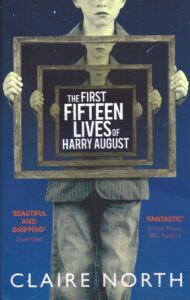
The First 15 Lives of Harry August - Claire North
Also very good!

The First Fifteen Lives of Harry August-Claire North


Thrill Power Overload - David Bishop
Needed a bit of 2000AD nostalgia so I've been rereading this. Essential stuff. 2000AD/Judge Dredd enthusiasts should also read John Newsinger's The Dredd Phenomenon

Ethan Frome - Edith Wharton
Needed a book full of snow! But what do we make of Zeena?!


We were Liars - e lockhart
The 6th formers read this for their book group and pestered me to read it. The writing is fine but the structure is awful. 40 pages in you know there's going to be some kind of shock/mystery ending and any experienced reader will know what it's going to be. The first half is a tease, the second half is all reveal and there is far too much telling rather than showing. DULL and annoying.
 
The Door that led to Where - Sally Gardner
This is the new Gardner after the very good Maggot Moon. We took some of the Yr9s to see her at another local school. Great writing - indeed it made want to read some Dickens but the plotting lets it down a little - the ending feels rushed and forced. It might have benefited from being slightly longer with more time spent in the Dickens' London. Enjoyable.
 
The Race - Nina Allan
Brilliant. Requires a reread and more thought. Hoping it wins the Kitschies.
 

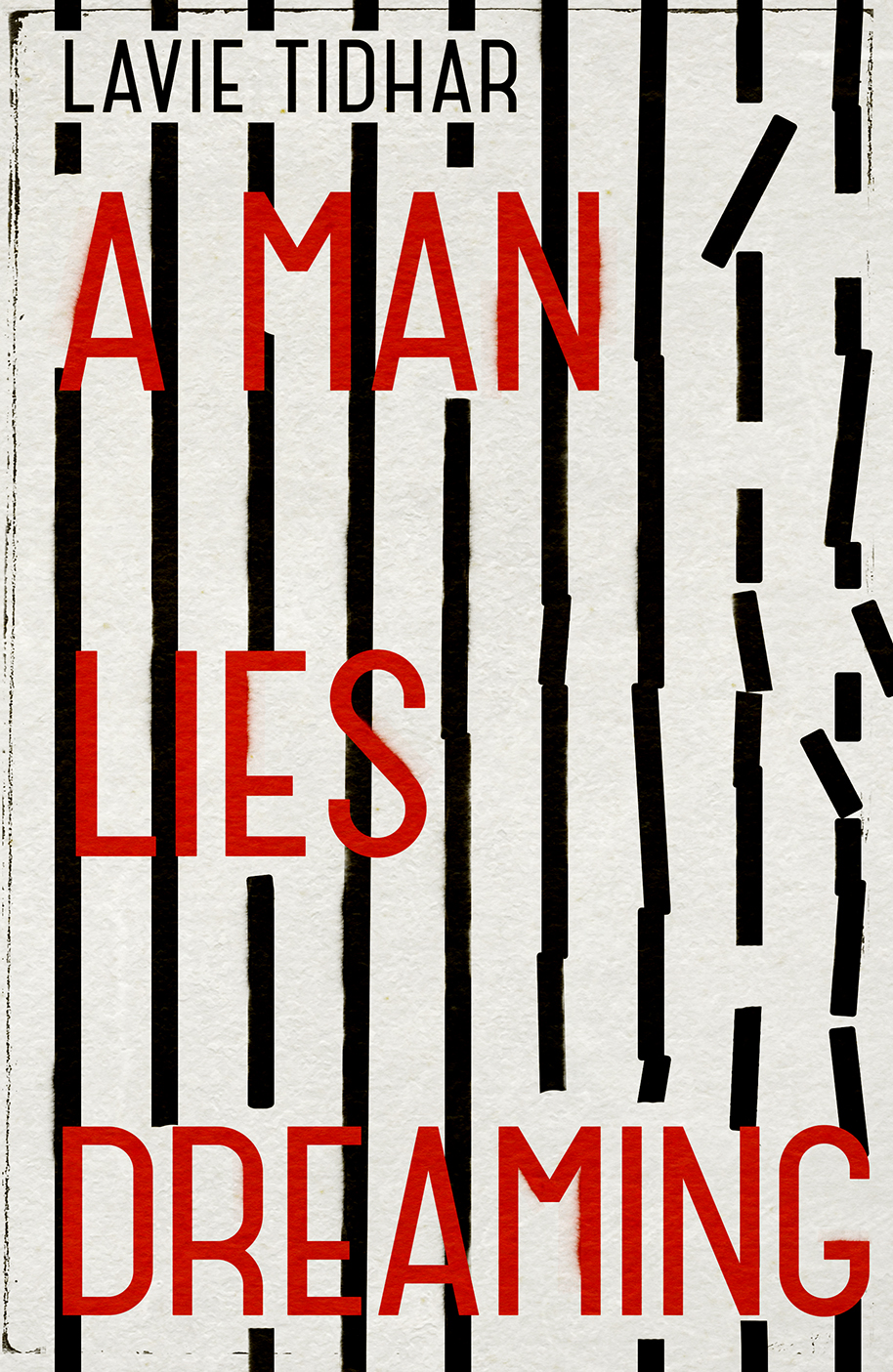
A Man Lies Dreaming - Lavie Tidhar
REALLY great! Review here.

A Man Lies Dreaming


Station Eleven - Emily St. John Mandel
Brilliant. Requires a reread and more thought also!
 
Grasshopper Jungle - Andrew Smith
Oodles of verve and personality AND original. Austin is such a strong voice and such a brilliant character.  I felt uncomfortable at various points about the portrayal of Shann but I'm not sure how Smith could have written it differently. Great to see such a strong YA novel on the Kitschies shortlist.
 
The Lie Tree - Frances Hardinge

Brilliant. As always - not that I will ever take Hardinge for granted. Review here.

Lagoon - Nnedi Okorafor
Ummm. Review here


Harvest - Jim Crace
Great. Review here.


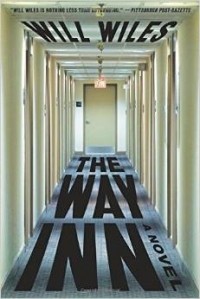
The Way Inn - Will Wiles

Great, but still thinking and need to reread some of the slightly less satisfying sections. Would be a worthy Kitschies winner if Allan doesn't win.


The Girl in the Road - Monica Byrne
Brilliant!

Here - Richard McGuire
I don't have the time or, more importantly, the money to buy loads of graphic novels but I read Chris Ware's review in the Guardian and treated myself. Read Ware's review. I'm only on my second read through but I suspect it's every bit as good as Ware suggests
Paul-Gravett-Comics-Art

Also rereading parts of Robert McFarlane's The Old Ways in preparation for Landmarks and have started to dip my toe into Paul Gravett's Comics Art.

On the TBR pile for March and April:

Kelly Link
Robert McFarlane
Kazuo Ishiguro
BSFA shortlist
More Jim Crace


Tuesday, 3 March 2015

Kitschies 2015


The Kitschies are awarded on March 4th. It's been a pleasure reading the shortlists though I've failed to read them all.
Lagoon coverThe Way Inn-Will Wiles


The Red Tentacle (Novel)

  • Lagoon - Nnedi Okorafor (Hodder & Stoughton)
  • Grasshopper Jungle - Andrew Smith (Egmont)
  • The Peripheral - William Gibson (Viking)
  • The Way Inn  - Will Wiles (4th Estate)
  • The Race - Nina Allan (NewCon Press)

The Golden Tentacle (Debut)

  • Viper Wine  Hermione Eyre (Jonathan Cape)
  • The Girl in the Road - Monica Byrne (Blackfriars)
  • Memory of Water - Emmi Itäranta (HarperCollins)
  • The Long Way to a Small, Angry Planet - Becky Chambers (Self-Published)
  • The People in the Trees - Hanya Yanagihara (Atlantic Books)

The best thing about reading a really good shortlist is the diversity of the writing - you get an amazing sense of all the different ways of telling a story. That and the pleasure. I get frustrated that too many novels tell the reader far too much and show too little. The best novels on these shortlists do interesting things whilst posing important and significant questions - without providing all the answers. I guess I'd single out Allan, Byrne, Wiles, and maybe Gibson in this regard. I'd love to make some generalisations about the current state of sci-fi, weird fiction etc. but I don't really feel qualified (or brave enough). That said I've already read Station Eleven, A Man Lies Dreaming, Wolves, Cuckoo Song, The Fifteen Lives of Harry August and two parts of the Southern Reach trilogy [and I'm still to read Bete, Europe in Autumn, The Book of Strange New Things, The Moon King and a couple of others) so I can confidently say it has been a very good year for speculative fiction: any of those could have easily been on the shortlist.


The Kitschies "reward the year’s most progressive, intelligent and entertaining works that contain elements of the speculative or fantastic". Choosing a favourite was difficult. I'd never read William Gibson before (!) but found myself enjoying The Peripheral immensely and The Way Inn was right up my street. I LOVE the verve, humour and originality of Grasshopper Jungle.  There's a kind of musical structure to the repetition and riffing I think, and an accumulation of detail and meaning that is very satisfying (and real). I suspect readers will have already made the Vonnegut comparisons. I've been making various Yr9 and Yr10 girls read it at school: unsurprisingly they love it too!  I've written about Lagoon - it wasn't for me, but Niall Harrison at Strange horizons thinks it will win. However, I'd love The Race to win The Red Tentacle. I will read it again before the BSFA awards and write about it if I pluck up enough courage. It's full of great writing, sophistication, empathy and grace. I really, really hope it wins. If not, Wiles would be a terrific winner too.

The Golden Tentacle is more difficult - I needed more time! I haven't got round to Yanagihara (though Nina Allan's post yesterday makes me wish I'd have prioritised it) and I got a bit irritated with Itäranta (book fatigue I suspect - I'll try again after a rest). I'm halfway through the Chambers and it is VERY entertaining - again I'm sure I'm not the first person to compare it with Firefly - but a little lightweight? I'm also about a third into Viper Wine and it's bonkers and thoroughly enjoyable but The Girl in the Road is some novel: important, illusive, vital, extraordinary. Eyre or Byrne then - I think I'll sit on the fence and be happy with either.


Thanks to all the writers and the judges for making it an amazing couple of weeks.

Now for the BSFA shortlist via The Buried Giant!

Friday, 27 February 2015

Harvest - Jim Crace

Harvest was shortlisted for the Man Booker and won the James Tait Black Memorial Prize in 2013. I ended up enjoying it a great deal (as I did with so much of that year’s literary fiction). I’ve now read nearly all the books on that year’s shortlists – there were some cracking novels:
Women’s Prize
  • Kate Atkinson: Life After Life
  • A.M Homes: May We Be Forgiven
  • Barbara Kingsolver: Flight Behaviour
  • Hilary Mantel: Bring Up the Bodies
  • Maria Semple: Where’d You Go, Bernadette
  • Zadie Smith: NW
(Elif Shafak’s Honour should have made it over Semple)
Booker Prize
  • NoViolet Bulawayo: We Need New Names
  • Eleanor Catton: The Luminaries
  • Jim Crace: Harvest
  • Jhumpa Lahiri: The Lowland
  • Ruth Ozeki: A Tale for the Time Being
  • Colm Tóibín: The Testament of Mary
It is the first Crace novel I’ve read and I think it’s unlike anything I’ve read before. Normally your brain starts buzzing with contexts, contrasts and comparisons when you’re reading but I couldn’t conjure anything. This in itself is really weird. So I felt a little set adrift but I soon settled into the lovely prose and the kind, enquiring and thoughtful musings of the novel’s narrator, Walter Thirsk. The writing is often sublime and gets better the more you became attuned to its rhythms and subtlety.

The plot is fairly straight forward. Strangers come to a remote village to settle just as another stranger, employed by Master Kent, has started to map the village: “A gentleman we did not recognise was watching our barley field to stub: a visitor, a rare event, exciting and unnerving” (4), but “What was he wanting from our soil, what were his charts securing” (8). This is a prelude to the enclosure of the land: “the closing and engrossment of our fields with walls and hedges, ditches and gates. He means to throw a halter round our lives” (40).  The unease created by the appearance of this map-maker prompts a first act of violence but the villagers come together to blame the other set of strangers: they are unjustly punished and brutally mistreated.  Finally another set of strangers appear, led by Master Kent’s cousin, the rightful owner of the land. The novel is full of the tragic consequences of these visitations – some caused by doubt, confusion and uncertainty, some caused by the desire for revenge and rough justice, some caused by the cruelty and destructive energy of the new lord. The narrator is Walter Thirsk, who was once, some twelve or thirteen years ago, himself a newcomer to the village before he married and settled down. The events cause Walter to question his status as insider or outsider as suspicion blooms everywhere.
Harvest is poetic and enigmatic but is nonetheless a vivid imagining of how people might have thought living in an isolated village some centuries ago – their habits of thinking that is, and a meditation on how people were connected to land, landscape and each other. Through that you get quite an acute sense that Crace wants us to think about insiders and outsiders today; immigrants and nation, belonging and exclusion, as well as our use of the land and the parlous state of the environment. I even worried a little the novel that was often speaking too directly about today rather than generating metaphors that resonate and play.
It’s easy to think that the novel is overly concerned with unreliability and that sense that history cannot be known – the preoccupations of so much modern fiction. Walter doesn’t see much of the action so his narrative is based on reports and stories of others and his hypotheses of what he believes or suspects. He is a brilliant creation, aware, often, of his faults and self-deceptions but also perceptive, knowledgable, philosophical and funny:
 “This morning I persuaded myself that probably it’s wise for all of us to hold our tongues for the time being and let these newcomers soak up the blame. But now, beneath these weighty clouds, I recognise my foolishness; no, let us name it as it is, my lack of courage and of honesty. Soak up is not a happy phrase, I think. The rain is pleasurable only for those not fixed in it, those who can look forward to a square of drying cloth, a roof, abed, sweet dreams. Tonight’s beneficiaries of Nature’s dowry do not include Mistress Beldam’s family” (51)
Actually, this narrative strategy is much more concerned with a fierce imagining of the way people thoughts and habits of thinking are bound up with the work they do. One would imagine that Crace is a bit of a leftie.
The text gives you a sense that the bonds between people are irreconcilably caught up in their relationship to labour and the land. Morality and religion are secondary to the rough, hard economy of everyday life and survival. Custom, tradition and family life are significant, yet loose, bonds in constant dialogue with desire, hunger and pragmatism. Crace gives his narrator a rich and rhythmical syntax and the specificity and range of vocabulary to identify satisfactions too. In this isolated village existence (in the face of omnipresent uncertainty – “the rule of seasons” (69) - a bad year’s crop could make life very hard indeed) there is, above all, a connectedness to the environment that is both necessary and deeply pleasurable. It does so, I think, without romanticising that pleasure: “Our great task each and every year is to defend ourselves against hunger and defeat with implements and tools. The clamour deafens us. But that is how we have to live our lives” (75). The novel also gives witness for the need of such communities for expert husbandry of the land and collective decision making; this has consequences too for the passing down of knowledge and history. This idea, that Walter is constantly trying to make sense of the world – out of necessity and habit - and turn it into knowledge, wisdom and story, is one of the huge pleasures of the novel
Yet the bonds between people are shown to be extremely fragile. Distrust, uncertainty, dishonesty are never far away – certainly when it comes to outsiders. The novel argues that without labour and land, or power, families and individuals become will be become fearful and isolated. I’m think Crace wants us to consider that the bond between humans labour and land is what creates community and that a greater alienation takes hold when it is sundered, rather than communicate some essential truth about the fragility of human behaviour and human existence - though readers might draw that conclusion. He offers us a conjunction – how the land was stolen from us during the enclosures and how everything is being taken from us again due to privatisation, the clamour for profit and capitalism’s masters’ disregard for the environment.
The novel also has much to say about the frontiers, expectations and dangers of these people’s lives, especially women’s: “The local women were like land – fenced in, assigned and spoken for, the freehold of their fathers, then their husbands, then their sons. You could not cross their boundaries, or step beyond your portion” (29) but one of the strangers is a woman, and “no better than any other wild quarry on common ground. Like any pigeon, any hare, she was fair game” (29). This woman will stay literally and figuratively on the margins of the text, and Walter’s village, thwarting expectation at every turn. Thirsk only sees this woman in glimpses and never gets to speak to her – he is enthralled and mystified by her. Her portrayal intersects with the brutality with which the new lord uses his power to bring chaos to the village. Crace wants us to think about the labels given to women in this society – mother, daughter, wife, witch, harlot – and the way Thirsk constructs ‘woman’ in his deliberations and imaginings.
Harvest is a deeply pleasurable book and the more I reread sections and think about it the better it gets. You get the satisfactions of apposite and finely wrought figures of speech, of irony and dramatic irony, the fine margins of a sympathetic and eloquent unreliable narrator trying to be reliable. The text also invites contemplation and discussion, not just about the layers of meaning in the text, but about what awaits us in the decades to come:

“this ancient place would soon be new…We’re used to looking out and seeing what preceded us, and what will outlive us. Now we have to contemplate a land bare of both. These woods that linked us to eternity will be removed by spring, if Master Jordan’s saws and axes have their way. That grizzled oak which we believe is so old it must have come from Eden to our fields will be felled and rooted out” (196)


Wednesday, 25 February 2015

Lagoon - Nnedi Okorafor


Lagoon is full of stuff to think about – here’s my list: Nigeria; Africa; Science-fiction; magic realism; satire; YA; carnivalesque; feminism; Bollywood; Nollywood; melodrama; spectacle; blockbusters; B-movies.

I include Bollywood because my knowledge of Nollywood is virtually zilch. I’ve only read three other Nigerian novelists - Chimamanda Ngozi Adichie, Chinua Achebe and Ben Okri but no other African sci-fi except Lauren Beukes’ Zoo City; my knowledge of Africa in general is largely political and historical but without personal experience – I’ve never been. I write all this because though I’ve done my best to think about context and to cherish the novel for its vibrancy and is difference – and I did enjoy it,  I just didn’t enjoy it half as much as I thought I was going to. It’s had great reviews; it’s on the BSFA shortlist and the Kitschies shortlist so I feel like I’m the one that’s got it wrong. Ho-hum.


Most people will have an inkling of the plot – aliens visit Lagos. At the beginning, three people – Adaora, Agu and Anthony - are chosen to meet the representative of the aliens, Ayodele. In the first section various characters are introduced – Adaora’s bully of a husband Chris, a brutish evangelical priest, a group of students hoping to try and kidnap the alien and a gay and lesbian activist group all have encounters with Ayodele. And this is just the beginning – you will also meet all manner of gods and monsters, superheroes and aliens. It’s frenetic, it’s a romp, it’s weird, it’s political; it’s antagonistic and daring, provocative and silly – all good things: very good things.


Furthermore the writing is functional and clear, and that’s OK - there is so much going on in terms of ideas that any kind of ornate writing could easily get in the way. Style and tone are fascinating. When you love Bollywood as much as I do you become used to different styles within a single work - melodrama as mode and hyper-dramatic plotlines - so as soon as I understood some of the things the text was doing, and playing with, I relaxed into it. The first section is often very funny though it becomes less so, by design, as the novel progresses. The middle section where the Nigerian gods appear is often intriguing. Overall, in terms of craziness, I was reminded of Ismael Reed, though it’s fifteen years since I read him so I could be wrong.


I thought about Pynchon too. Its kind of hard to care about the characters in a Pynchon novel but there are other compensations - the language, the humour,  the ideas and the complexity. Some people will find satisfaction in how Lagoon's challenges sci-fi orthodoxy, in the verve of its playfulness, its conceptual daring and the belligerence of its satire. Still, mixing the novel of ideas with melodrama and comedy is hard to get right and there are fine limits. Unfortunately I never really believed in Adaora or Chris, I wasn't really interested in the characters and some of the dialogue pushed at the limits of dramatic and dropped off the other side. There was something too about the novel's sensibility that I didn't warm to.


In the middle I actually went off and reread a little Bakhtin – just for inspiration, but it didn’t help.
Of that original list above the only thing I’m bored of, and grumpy about, is blockbusters. Right now I’d be happy if I never saw another one. Unfortunately there are moments in this book when I couldn’t think about anything other than blockbuster movies – I kept having flashbacks to Independence Day for instance – not good. Some of the action scenes – the one in the boat in section three – are even, well, a little dull and that last third struggled to keep my interest.

And there’s worse I think, throughout my reading (and film watching life) I encounter film and literature that puzzle and confound me and make me think again. I’m sure that’s true for most people.  Watching Tarkovsky or Kiarostami for the first time or reading Kafka or Toni Morrison or Muriel Spark, though intriguing and enjoyable, made me think, quite seriously, that I was totally out of my depth – unsuited even, for understanding great art. But then you reread, investigate, look for criticism and try to expand your horizons and understand. I’ve read some of M John Harrison’s books 3 or 4 times and as much as I love them, I still don’t understand half of it. Unfortunately, though I’m sure Lagoon has hidden depths I find myself not caring overly much. I appreciated some of the things the text is doing more than I enjoyed it.

I’m really sorry that I can’t fully embrace this novel. It’s fascinating, intelligent and original and I’d urge everyone to read it. It’s exactly the kind of book I want the BSFA and the Kitschies to include in their shortlists. I feel mean not loving it but I don’t. Sorry. Again.

If you want a more positive spin read T S Miller’s excellent review at Strange Horizons.