Tuesday, 24 February 2015

Thank you Adam Roberts

So many books - where do you start? The first book I truly loved, in my late teens - was The French Lieutenant's Woman. I read up about Fowles and discovered he loved Le Grand Meaulnes and Hardy so I read them. I discovered New York trilogy and The Invention of Solitude. Auster loved Hunger, Kafka and Melville so I read them. I started reading the Guardian. I started reading shortlists. This is not unusual I suspect.


These days it's much easier. Mike Harrison wrote lists of 'some interesting science fiction' and 'some good fantasy' on his blog a few year ago: there's still a few I haven't read. Nina Allan writes brilliantly on her blog. Strange Horizons is a fantastic resource. China Mieville is always recommending good books in interviews. There are more shortlists than ever before and there is still the Guardian. Over time you decide who you can trust and you can easily follow your favourite critics and authors.


Not in any kind of weird, stalkerish way of course.

Lol.

Anyway, Adam Roberts it seems, has stopped blogging on Sibilant Fricative. I can't have any complaints obviously - I just try to enjoy things when they are there. Also, I have no idea how the man finds the time to do all the things he does. This is a simple thank you for all the thoughts and laughs you've provoked over the years (with Punkadiddle too) and all the great recommendations. Hopefully you'll still write for the Guardian, Strange Horizons, etc.


Great Kitschies shortlists btw!


Here's a bit of Love and Death too:


https://www.youtube.com/watch?v=eEETZTs795U


The Lie Tree - Frances Hardinge


“The boat moved with a nauseous, relentless rhythm, like someone chewing on a rotten tooth. The islands just visible through the mist also looked like teeth, Faith decided. Not fine, clean Dover teeth, but jaded, broken teeth, jutting crookedly amid the wash of the choppy grey sea. The mailboat chugged its dogged way through the waves, greasing the sky with smoke”

The first paragraph of The Lie Tree gives you all you need to know about this magnificent book. First, the similes and metaphors are powerfully evocative. You can feel the dreadful cadence of that ship and the tension and anxiety induced by that vista of harsh, imposing islands in the distance. Read it out loud too – feel how the sentences work; ‘jutting crookedly’ is perfect isn’t it? As always then with a Hardinge novel we know reading will be intensely pleasurable because the writing is so good. You can’t help but smile at the language and the figures of speech at the same time as they generate significance and strangeness and propel the narrative onwards. The text draws attention to itself but never gets in the way of telling the story.

Regular readers of Hardinge might also suspect something else is afoot: you’d be right. This is a gothic tale full of peril and suspense – something new in the Hardinge catalogue. Cuckoo Song was horribly scary for its first third but became an adventure for the rest of the book. The Lie Tree, whilst containing significant components of adventure and mystery, is full of preternatural dread and uncanny menace and never lets its grip on you loosen. You feel a knot of tension in your stomach throughout.
The Lie TreeThe book is set on a small island in the English Channel in the latter half of the nineteenth century (around 1869). Teenager Faith has travelled with her younger brother, mother, father and uncle, ostensibly so that her father – a Reverend and a natural scientist, can provide expertise for an archaeological dig. But there are intimations that the family are fleeing from intrigue and the shame of scandal. Furthermore it’s clear that Faith is dissatisfied, not just with her stern father and manipulative mother but with the expectations placed on her to be placid and ladylike; instead she is “full of questions, coiling and writhing like [a] snake”.

 The novel has a lot to say about the limitations of girl’s and women’s lives in Victorian England. Faith has “tumbled off the safe, hallowed shore of childhood, and now she was in no-man’s water, neither one thing nor another, like a mermaid. Until she dragged herself up on the rock of marriage, she was difficult” but the novel charts her progress to greater self-knowledge (and knowledge about the world) and reveals the difficulties and secrets at the heart of many women’s lives. It is historically fascinating, joyfully liberating whilst also, I think, despite all the improvements in women’s lives, sharply and powerfully relevant for today.

One of the best things about The Lie Tree is its richness and the feeling that you are solidly grounded in a dense, yet mysterious, forest of intertextuality.  Younger readers will be reminded of myths, fairytales and possibly some bible stories. Older readers will struggle not to think of Daphne du Maurier and all manner of nineteenth century classics, especially Wilkie Collins. There is throughout a delectable use of language to evoke period and mood; “A half-human face with a sloping brow glowered with hostile stupefaction” provides the heat-trace of Dickens or Poe whilst retaining clarity and a sense of danger.

I could quote it all day to be honest – my kindle is marked every page or so by figures of speech, details that add layers and depth or character, and frequent glimmers of the uncanny or glimpses of the darkness: “People were animals, and animals were nothing but teeth. You bit first, and you bit often. That was the only way to survive”.  It’s a novel full of ideas and intelligence but don’t think for a second that Hardinge skimps on plot. There is never a dull interlude and the narrative picks up its pace thrillingly before hurtling, breathlessly, to its denouement, shooting off surprises and revelations as it goes.

Doubts? Not really. Marcus Sedgwick is probably the UK’s best purveyor of gothic – I’m a big fan of My Swordhand is Singing for instance, but The Lie Tree is on a whole different planet of brilliant. The novel raises some good questions for debate however. There were moments when I wondered if the tensions and mysteries in the plot were perhaps overly dependent on Faith’s (mis)understanding of events. It is a difficult and delicate balance to preserve so this is being very picky indeed. Also, though Hardinge is as always, deeply aware of class and power in social relationships, it was slightly unusual for a Hardinge protagonist to be middle class and for the actions of many of the novel’s working class characters to be less sympathetic than usual. Finally I wonder if some of Hardinge’s fantasies are more complex and richly metaphorical? These are genuine questions – only answerable after a second reading and a good discussion. In the mean time I will be eagerly awaiting publication date so I can get copies in the library and buy copies for friends. The Lie Tree is brilliant; I finished it delirious and deeply happy.

This is how I finished my review of Cuckoo Song last year:

What is more astonishing, and downright weird, is that Hardinge hasn’t picked up an award or three along the way and isn’t being heralded up and down the land as a national treasure.
I’m glad to say that that Cuckoo Song has made two shortlists and a long list in the last month: the BSFA Award shortlist, the James Herbert  Award shortlist and the Carnegie longlist. Furthermore she is also a judge for this year’s Kitschies. Hopefully the times they are a changing.

Friday, 13 February 2015

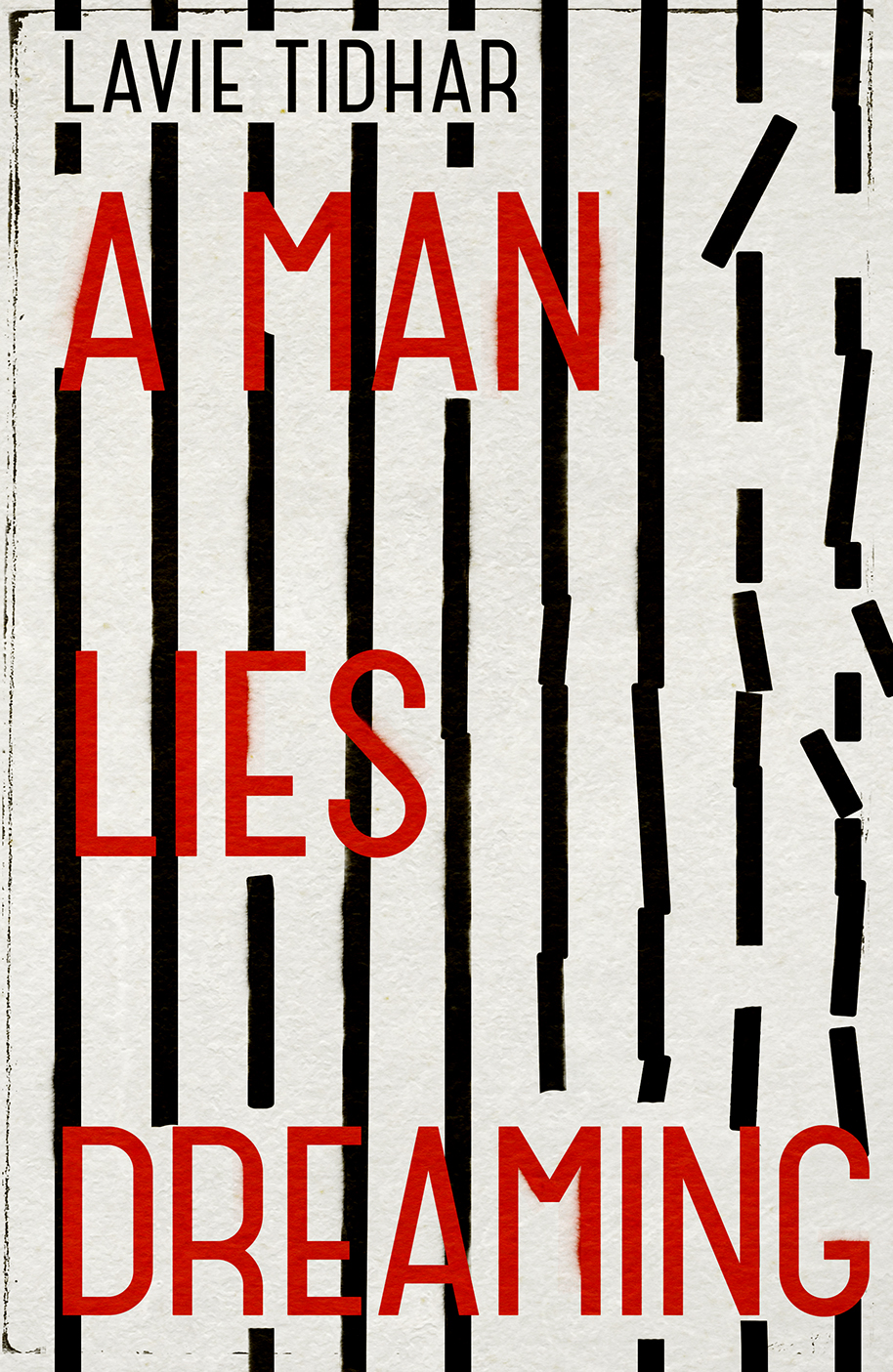
A Man Lies Dreaming - Lavie Tidhar


A Man Lies Dreaming

The first books I really fell for, that made me a reader, I discovered in short succession back in the late 80s. Reading Paul Auster’s New York Trilogy, John Fowles’ The French Lieutenant’s Woman and Jeanette Winterson’s Oranges Are Not the Only Fruit was exhilarating and opened my mind up to all kinds of new possibilities. I didn’t understand then about metafiction or slipstream but it didn’t matter because I realised that playing with the structure of narrative and stressing their fictionality didn’t make me care any less about the characters or about what was going on but did start me thinking about the nature of ‘realism’ and many more questions too. Reading  two novels by Lavie Tidhar and Nina Allan (The Race) over the last week has reminded me of that sense of wonder, though not, I should stress, with any hint of nostalgia – both novels feel excitingly relevant, political and necessary. They remind me too of how much I loved Eleanor Catton’s The Luminaries last year.

So, A Man Lies Dreaming. I already admire Tidhar’s two previous novels Osama and The Violent Century so my expectations were high.  To begin with I wasn’t sure what to make of the novel’s pulp sensibility - Hitler as main character in a text laced with lashings of sexual violence, sex and kink! However as with lots of great novels, especially metafictional texts, this one teaches you how to read as you go along and keeps on accruing depth as it progresses*.

A Man Lies DreamingThe novel is set in November 1939 - a very different 1939 where the Communists won the 1933 German elections and have since smashed the Nazi threat. Hitler, now calling himself Wolf has made it to London and is working as a private eye. In this London the fascist Oswald Mosely and his blackshirts are on the verge of an election victory. Or so we think to begin with. It quickly becomes clear however that this alternate history is probably the dreaming of a Jewish pulp writer, Shomer, trying to survive in Auschwitz.

The text has three different narrative parts – a diary by Wolf, a third person narrative that keeps very close to Wolf and a third person narrative that describes Shomer’s life in the concentration camp. There are also underlined notes throughout the text that refer back to Mein Kampf or other texts and sources as though an editor, or the narrator, has been searching for historical authenticity. If there are strong similarities to the noir of Raymond Chandler and his ilk at various points there is also a very playful irreverence and a different kind of sensibility that I am simply not used to. The last time I read a pulp novel was probably in the seventies – a young boy fascinated by the giant crab and the naked woman on the cover of a Guy N Smith novel (I think?) - so to begin with I was a little shocked and surprised. I’m not easily shocked or surprised these days.

Being shocked, of course, is a very good thing. Tidhar, quotes Hannah Arendt as one of the epigraphs:

“Clichés, stock phrases, adherence to conventional, standardized codes of expression and conduct have the socially recognized function of protecting us against reality.”

Tidhar wants us to think anew, primarily, perhaps about the difficulty of writing about the holocaust. The novel is also a significant and grave examination of the dangers of racism and the scapegoating of immigrants and Muslims in Europe today. We are so used to our politicians and media playing the race card that it’s all too easy to become inured to it and regard it as just the usual crap. Tidhar wants us to follow the logic through however and investigate the consequences. Perhaps it could mean the construction of another state like Israel, with all the imperialism, nationalism and racism that go hand in hand with such a project. Perhaps it could be even worse: he suggests that if we assume that nothing as bad as the Holocaust could ever happen again we are, most probably, terribly and vainly mistaken.

The text is deliciously clever. Tidhar lets us imagine that Shomer gets some pleasure from putting his Hitler through a series of horrific beatings and enjoys humiliating him with the portrayal of his sexual deviancy. The reader gets pleasure too of course but Tidhar is searching for much more than humiliation. A Man Lies Dreaming is one of the funniest novels I’ve read in a long time: “Wolf went into the small closet to urinate and stared in horror at his circumcised penis before tucking it away again”, but as I laughed it was hard not to remember the horrific scene when Wolf is circumcised. It’s incredible that the novel contains history’s most unsympathetic man, uses him as character and narrator, to provoke not just horror and ridicule but to overcome lazy, binary thinking and inspire empathy and a desire to understand too. There is a diary entry (in Chapter 10) where Wolf dreams that he is in a concentration camp and there are other moments, especially when Wolf remembers his love for his mother, that are incredibly powerful. There’s another bravura section where Shomer lies injured in a hospital bed just as Wolf is pumped full of opiates after a particularly bad beating. It’s a woozy, hallucinogenic and uncomfortable section where the characters start to bleed together and become confused – again, brilliant, suggestive and structurally precise.

To say too much more would be to spoil the novel and explain it away – you’ll have to see how the pieces fit together for you. Tidhar seems to be in complete control of his prose, the structure and the historical material. There are so many brilliant details and finely judged set-pieces. I loved it – it’s fearless and audacious, raucously enjoyable and yet deadly serious.

Just in: I’m writing this just as the Kitschies and BSFA shortlists have been released and I’m disappointed A Man Lies Dreaming made neither. That said it’s hard to criticise either list as 2014 was undoubtedly an unusually rich year for speculative fiction (and secondly because two of my favourite authors are on the Kitschies judging panel!). It’s worth noting that there is no room for Jeff VanderMeer’s brilliant Southern Reach trilogy or Emily St. John Mandel's Station Eleven either. All three works deserve a wide, wide readership.

*Shouldn’t all novels accrue depth and significance as they progress? Probably, but the majority don’t – they really don’t. A subject for another day….

Thursday, 8 January 2015

Films - December


At the cinema:
  • Winter Sleep
  • The Homesman

The Homesman Cannes 2014

  • The Hobbit: Battle of the Five Armies.

  • The Grandmaster


On DVD/Blu-ray:
  • Bastards

  • Ankhon Dekhi

  • City Lights

Film review: CityLights


  • Exhibition

  • The Ballad of Narayama (1983)

  • Snowpiercer

Snowpiercer Is One Of The Best Sci-Fi Movies In Years


  • The Past

  • We Are The Best

  • The Lego Movie

  • Calvary

  • The Colour of Pomegranates (1968)

  • Shadow of Forgotten Ancestors (1965)

  • Only Lovers Left Alive

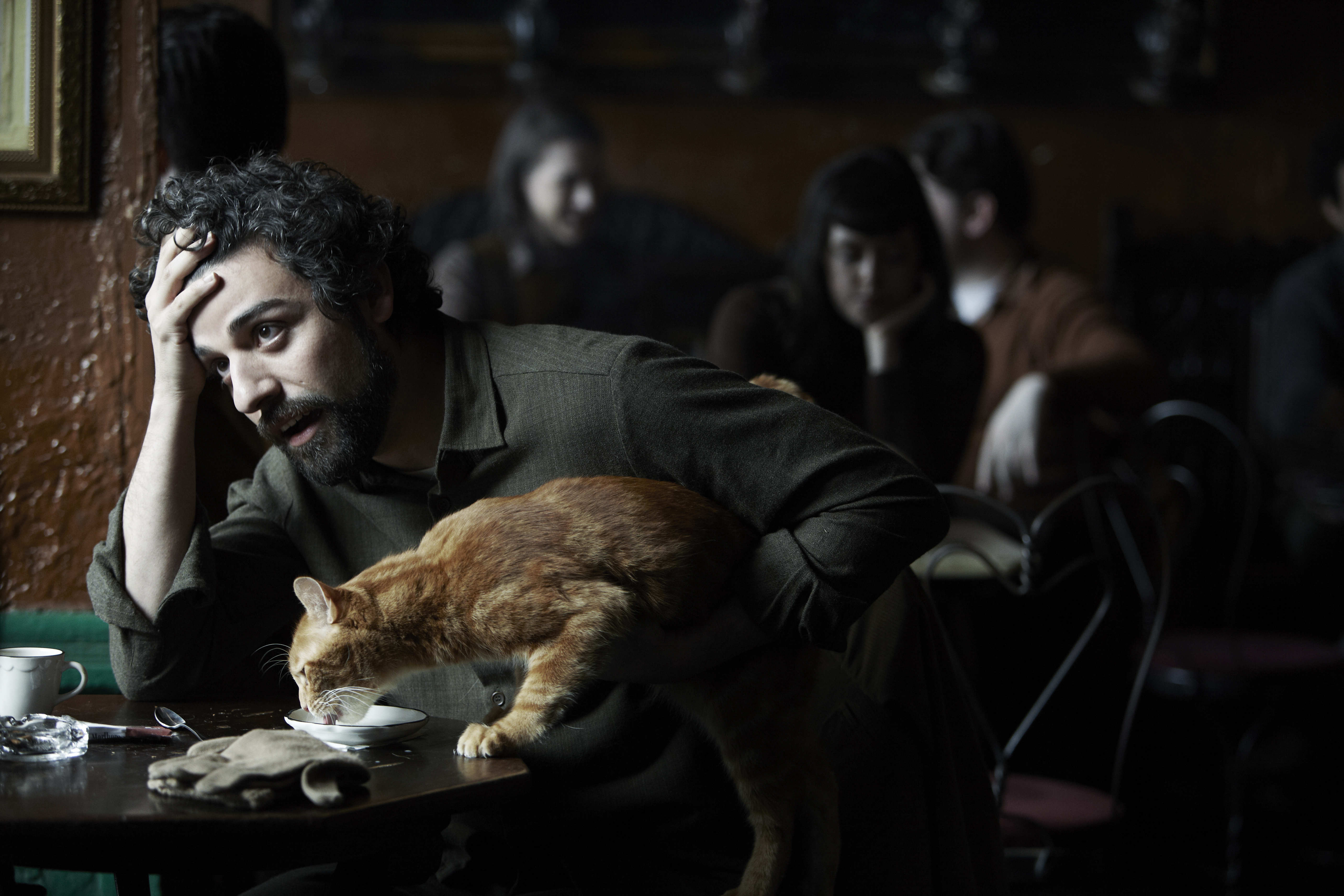
  • Inside Llewyn Davis


Image

  • The Grand Budapest Hotel

  • The Conversation (1974)

  • Frozen (2012)

  • Finding Vivian Maier


  • Climates (2006)

  • Three Monkeys (2009)

  • Solaris (1975)


  • Solaris (2002)

  • Under the Skin

  • Love and Death (1975)

  • Pale Rider (1985)

  • Day of the Outlaw (1959)


  • The Square

  • Ida

  • Breakheart Pass (1975)


  • Ivan's Childhood (1962)

  • Andrei Rublev (1966)

  • Lucy

  • The Babadook

  • The Sweet Hereafter (1997)

A Scene from The Sweet Hereafter.


  • Two Days, One Night

  • Dark City (1998)

Thursday, 18 December 2014

Films of the Year 2014: Part 2 - women.

In comparison to 2013 it feels like a lean year for women in film. There are notable exceptions however – in Indian cinema especially, but I’ll cover that in a different post.
 
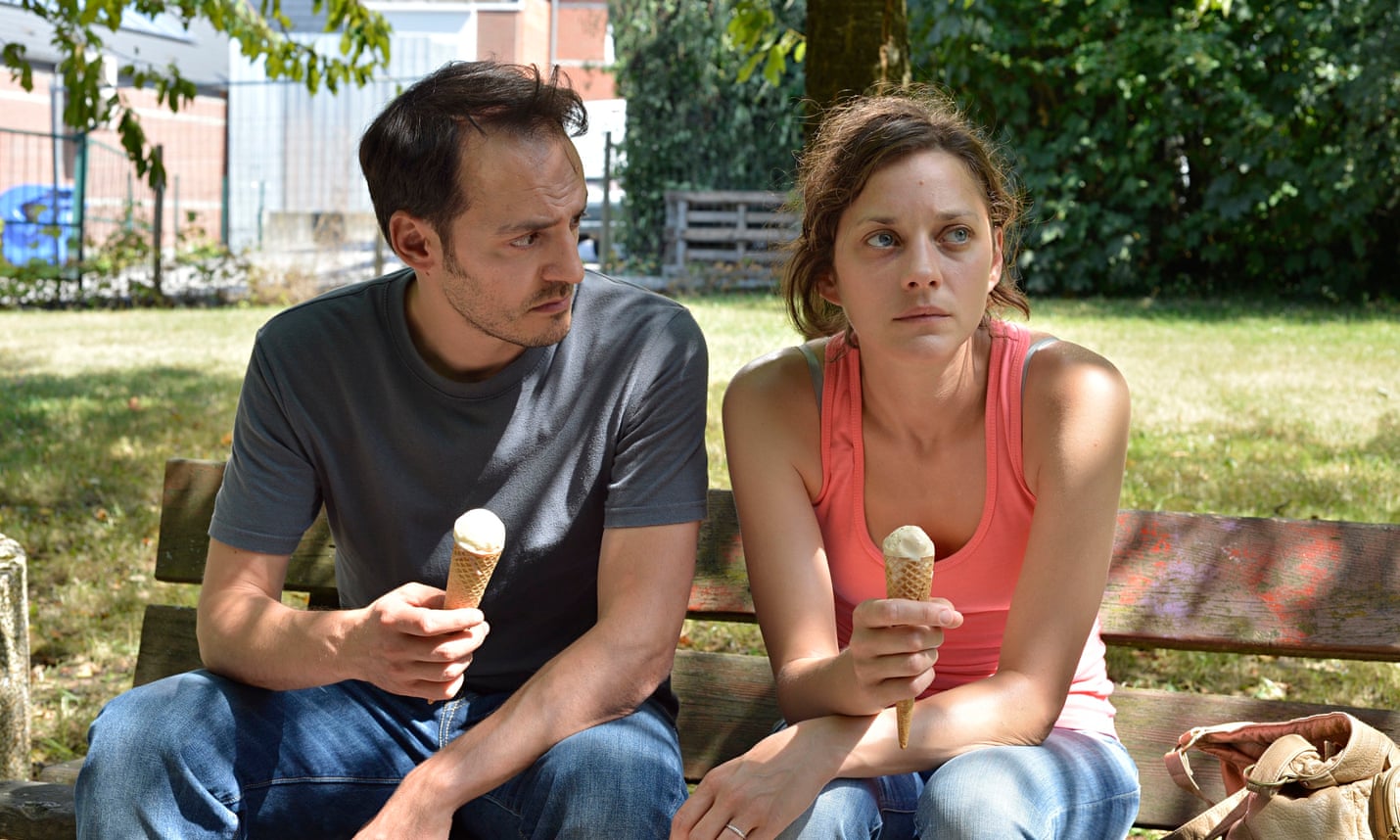
Two Days, One Night

Five women are central to three of the most significant films of the year. Marion Cotillard’s performance in Two Days, One Night was the best of the year. Melisa Sözen and Demet Akbag are fantastic in Winter Sleep whilst Agata Kulesza and Agata Trzebuchowska are key to the success of Ida. All three films have attracted significant criticism however. In Sight and Sound Tony Rayns review of Jean-Pierre Dardenne and Luc Dardenne’s latest film was annoyingly patronising but elsewhere it garnered a mass of 5 star reviews. For most critics Niri Bilge Ceylan’s Palme D’Or winner doesn’t quite possess the quality of Once Upon a Time in Anatolia (2011) or Uzak (2002) and, at 3 hours 16 mins, is too long. Jonathan McCalmont’s criticisms of Pawel Pawlikowski’s Ida are, as always, intriguing. Nonetheless for me they were the three most intense and spellbinding cinematic experiences of the year – they are all in my top five.

спячка
 
Other notable performances in very good films include Hilary Swank in The Homesman, Bérénice Bejo in The Past, Mia Wasikowska in Tracks, Angeli Bayani in Norte, The End of History and Scarlett Johansson in Under the Skin.

The Past 2
 
Behind the camera it was exciting to see new films from Katell Quillévéré (Suzanne), Joanna Hogg (Exhibition) and Kelly Reichardt (Night Moves). Even better perhaps was a debut - Jennifer Kent’s The Babadook with a brilliant lead performance by Essie Davis.
 

One of the joys of 2014 was the return of Lukas Moodysson, in great form, with We Are the Best. At the turn of the century Moodysson made three magnificent films – Show Me Love (1997)  Together (2000) and Lilya 4-ever (2002). Since then he has lost his way but this year’s film, based on a graphic novel by his wife Coco, is a lovely, grown-up tale of three young teenagers starting a punk band in the early 80s. Mira Barkhammar as Bobo, Mira Grosin as Klara and Liv LeMoyne as Hedvig are given a mature, focused script and achieve wonders – they are all utterly brilliant. On one level this could have joined Queen and Pride on my ‘most pleasurable films of 2014’ but at his best Moodysson achieves a tone that is at once funny, ebullient, melancholic and determinedly serious. If anyone wants to see what ‘strong female characters’ look like then watch this film. The girls are both incredibly normal – fickle, jealous, manipulative – and wonderfully anarchic – I won’t spoil the scenes which show their determination, spirit and love of life. I’ve watched it three times – every time it gets better, but it’s also the way the film draws you in each time that is so deceptively clever. The soundtrack is a belter and the cinematography by Ulf Brantås is perfect.
 

2015 looks like it will be an exciting year with Ana Lily Amapour’s A Girl Walks Home Alone at Night, Mia Hansen-Løve’s Eden, Céline Sciamma’s Girlhood and Alice Rohrwacher's The Wonders all released in the first half of the year.

Wednesday, 17 December 2014

Films - September, October and November.


The autumn is usually the best time for cinema but for once I don't think it's quite matched up to the spring. That said Pride was the most easily enjoyable film of the year whilst Ida might be the best. I usually hate Mike Leigh films - his caricatures and his patronizing way with working class characters get in the way of any enjoyment. Mr Turner still suffered from these faults but less so and there is much that is good in it. Some thought A Most Wanted Man slow and pedestrian but it had me hooked from the first moment. '71 was one of the nicest surprises of the year.
   I missed Locke and Joe at the cinema yet both are fantastic. Tom Hardy and Nicholas Cage pull off two of the best performances of the year.


At the cinema:
 
  • Pride
PRIDE

  • A Most Wanted Man
  • '71
  • Gone Girl
  • Nightcrawler
  • Say When
  • Mr Turner
  • Ida

Ida shows the rich glories a monochrome palette can achieve in film
  • The Imitation Game
  • Haider
A Still From 'Haider'
  • Interstellar
  • Paddington
On DVD/Blu-ray:
 
  • Plein Soleil (1960)
  • Sophie's Choice (1982)
  • Locke
  • Joe
Joe
  • Starred Up
  • Mary Kom
  • Miss Lovely
Miss Lovely
  • Khoobsurat
  • Gulabi Gang
  • Tell No One (2006)

Films of the Year 2014: Part 1 - Kangana Ranaut in Queen


Queen and Pride: the most enjoyable cinema experiences of 2014.

The two most enjoyable films of the year were Matthew Warchus's Pride and Vikas Bahl’s Queen. Beyond those two 22 Jump Street was a lot of fun whilst Guardians of the Galaxy had lots of good moments. The most enjoyable blockbuster was surprisingly Captain America: The Winter Soldier – who woulda thought it? Here I want to write about Queen.

Queen was a ‘super-hit’ in India and is the 14th highest grossing film of the year. It would be easy to make fun of this statistic – most of the top 10 are fairly bog standard Bollywood blockbusters so why pay any attention to box office numbers?
Two Indian women sit on a picnic table. One is crying.
First the plot: Rani (Kangana Ranaut) is about to get married, but her fiancé (Rajkummar Rao), back from London, calls off the wedding days before. Rani is devastated but eventually decides she would still like to go by herself on her dream honeymoon to Europe; first to Paris and then to Amsterdam. Her parents acquiesce and what follows is a vibrant journey of self-discovery and liberation.

You really have to appreciate what an unusual film this is. Kangana Ranaut carries the film completely - she is extraordinary as a meek, scared and shy young woman who becomes increasing confident, quietly determined and open to all the new experiences around her. Sure there are male characters but there is no male lead. This is still rare, though of course, becoming slightly less rare – recently we’ve had Mardaani, Kahaani, English Vinglish and Mary Kom.

Next, the other main female character Vijayalakshmi (Lisa Haydon) who befriends Rani in Paris is a hard drinking, cannabis smoking, promiscuous, single parent. And, here is the surprising bit; the character is a lovely, warm-hearted, brilliant human being. There are moments when Rani quietly wants her to tone it all down but there is no critique of her behaviour in the film. If anyone wants to direct me to similar characters in Hindi film, then please tell. This is a big two fingers up to the moral majority who believe women like that are sluts, slags and, frankly, lesser human beings.

Now get ready to be shocked again. The main male Indian character is a fairly pathetic excuse of a man. Set against him are four men Rani meets in Amsterdam: a charming Italian restaurateur and three students, Taka from Japan, Oleksander from Russia and Tim from France. All the men are fun loving, indulge in drinking and boisterous behaviour but again, are sympathetic characters portrayed with humour and warmth. And Tim is, hold your breath, of African descent – yes Bollywood fans he is a person of colour!  If you think my tone is a little too facetious, fair enough, but let’s be clear: non-Indian male characters in Bollywood films are usually little more than crude stereotypes and objects of humour.
Queen 2014 Movie Images 540x377 Queen 2014 Movie Images
Most Bollywood movies that try to confront the bizarre cultural assumptions of modern India get trapped in their own contradictions or can’t quite go all the way and bail out with too many compromises. I won’t spoil the ending of Queen but I will say the film gets it just right. Of course there are issues. In some respects the film is very much a fantasy of liberation. Would Rani’s parents have let her go to Europe unaccompanied? Would anybody be lucky enough to meet such a tremendous bunch of strangers?  There is also one awful scene in a brothel that manages to make prostitution seem like a Disney dream and one other in a sex shop that is perhaps a little too broad and relies too much on Rani’s innocence. Furthermore the action has been transferred to Europe and so it will be easy for Indian audiences to feel that the film’s feminist sensibilities and its social criticism, is too easily divorced from their own experiences. Unfortunately I doubt whether any one would have the guts to make a similar film set in India. Thankfully the final scenes ground Rani back in India and the audience is confident that this is a woman who has changed for good.
Furthermore it’s all done with a grace, tenderness, integrity and sense of fun that Hollywood rarely achieves; for the most part there is a delicious lightness of touch to it all and it never feels preachy. I left the film on a kind of Bollywood sugar rush – excited, emotional and a little bit hyper. I’ve watched it since and it’s still brilliant.
My experience so far of sharing Queen with friends and with Hindu, Sikh and Muslim girls at school is fascinating. Some of the younger teenagers seemingly take on the moral indignation of their parents and don’t know what to make of it. Even some of the older ones feel uncomfortable watching it with older members of their family. One even started watching it with a family group but had to switch it off when members of the older generation complained about the content. Thankfully she, and several others, have loved it.
Queen’s super-hit status in India would seem to indicate that a large section of the cinema going public loved it too. I've decided to allow myself the belief that this holds a small source of hope for the future. For any Westerners who have yet to experience the joys of Hindi cinema, Queen is a big-hearted wonder of a film and shows Hollywood how to make a comedy-drama without the lashings of sexist, homophobic nonsense we have become so accustomed to. Treat yourself and see it.