Thursday, 8 January 2015

Films - December


At the cinema:
  • Winter Sleep
  • The Homesman

The Homesman Cannes 2014

  • The Hobbit: Battle of the Five Armies.

  • The Grandmaster


On DVD/Blu-ray:
  • Bastards

  • Ankhon Dekhi

  • City Lights

Film review: CityLights


  • Exhibition

  • The Ballad of Narayama (1983)

  • Snowpiercer

Snowpiercer Is One Of The Best Sci-Fi Movies In Years


  • The Past

  • We Are The Best

  • The Lego Movie

  • Calvary

  • The Colour of Pomegranates (1968)

  • Shadow of Forgotten Ancestors (1965)

  • Only Lovers Left Alive

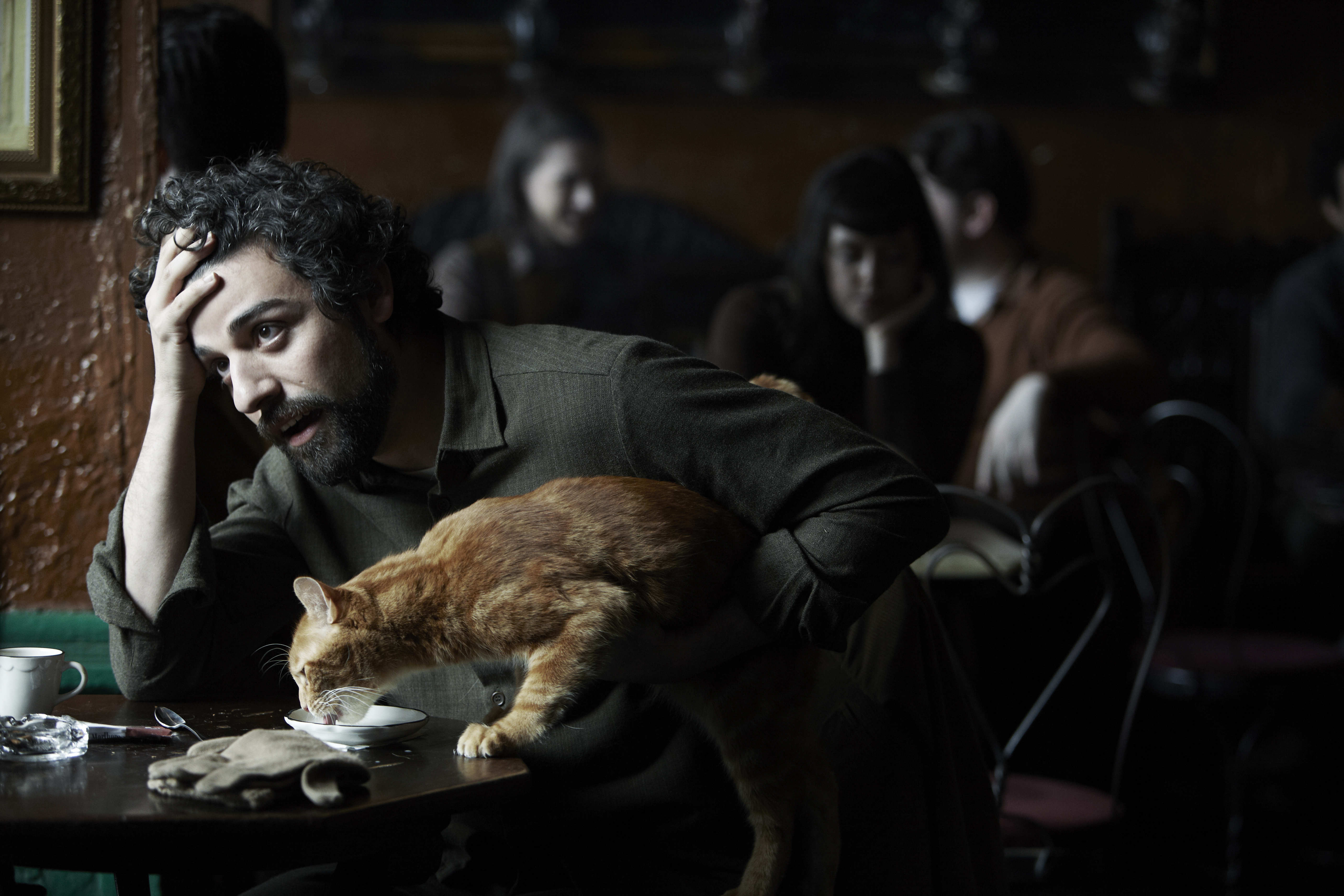
  • Inside Llewyn Davis


Image

  • The Grand Budapest Hotel

  • The Conversation (1974)

  • Frozen (2012)

  • Finding Vivian Maier


  • Climates (2006)

  • Three Monkeys (2009)

  • Solaris (1975)


  • Solaris (2002)

  • Under the Skin

  • Love and Death (1975)

  • Pale Rider (1985)

  • Day of the Outlaw (1959)


  • The Square

  • Ida

  • Breakheart Pass (1975)


  • Ivan's Childhood (1962)

  • Andrei Rublev (1966)

  • Lucy

  • The Babadook

  • The Sweet Hereafter (1997)

A Scene from The Sweet Hereafter.


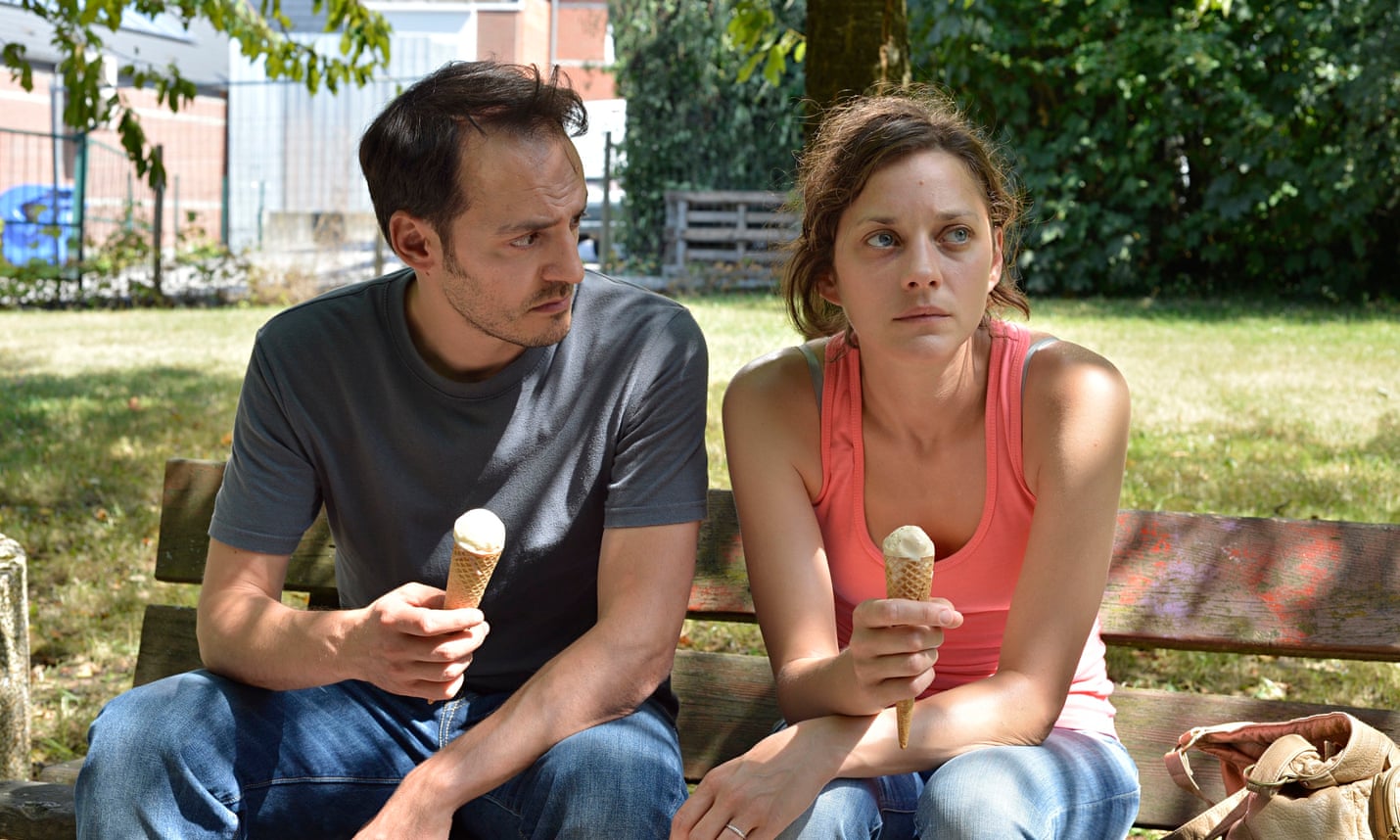
  • Two Days, One Night

  • Dark City (1998)

Thursday, 18 December 2014

Films of the Year 2014: Part 2 - women.

In comparison to 2013 it feels like a lean year for women in film. There are notable exceptions however – in Indian cinema especially, but I’ll cover that in a different post.
 
Two Days, One Night

Five women are central to three of the most significant films of the year. Marion Cotillard’s performance in Two Days, One Night was the best of the year. Melisa Sözen and Demet Akbag are fantastic in Winter Sleep whilst Agata Kulesza and Agata Trzebuchowska are key to the success of Ida. All three films have attracted significant criticism however. In Sight and Sound Tony Rayns review of Jean-Pierre Dardenne and Luc Dardenne’s latest film was annoyingly patronising but elsewhere it garnered a mass of 5 star reviews. For most critics Niri Bilge Ceylan’s Palme D’Or winner doesn’t quite possess the quality of Once Upon a Time in Anatolia (2011) or Uzak (2002) and, at 3 hours 16 mins, is too long. Jonathan McCalmont’s criticisms of Pawel Pawlikowski’s Ida are, as always, intriguing. Nonetheless for me they were the three most intense and spellbinding cinematic experiences of the year – they are all in my top five.

спячка
 
Other notable performances in very good films include Hilary Swank in The Homesman, Bérénice Bejo in The Past, Mia Wasikowska in Tracks, Angeli Bayani in Norte, The End of History and Scarlett Johansson in Under the Skin.

The Past 2
 
Behind the camera it was exciting to see new films from Katell Quillévéré (Suzanne), Joanna Hogg (Exhibition) and Kelly Reichardt (Night Moves). Even better perhaps was a debut - Jennifer Kent’s The Babadook with a brilliant lead performance by Essie Davis.
 

One of the joys of 2014 was the return of Lukas Moodysson, in great form, with We Are the Best. At the turn of the century Moodysson made three magnificent films – Show Me Love (1997)  Together (2000) and Lilya 4-ever (2002). Since then he has lost his way but this year’s film, based on a graphic novel by his wife Coco, is a lovely, grown-up tale of three young teenagers starting a punk band in the early 80s. Mira Barkhammar as Bobo, Mira Grosin as Klara and Liv LeMoyne as Hedvig are given a mature, focused script and achieve wonders – they are all utterly brilliant. On one level this could have joined Queen and Pride on my ‘most pleasurable films of 2014’ but at his best Moodysson achieves a tone that is at once funny, ebullient, melancholic and determinedly serious. If anyone wants to see what ‘strong female characters’ look like then watch this film. The girls are both incredibly normal – fickle, jealous, manipulative – and wonderfully anarchic – I won’t spoil the scenes which show their determination, spirit and love of life. I’ve watched it three times – every time it gets better, but it’s also the way the film draws you in each time that is so deceptively clever. The soundtrack is a belter and the cinematography by Ulf Brantås is perfect.
 

2015 looks like it will be an exciting year with Ana Lily Amapour’s A Girl Walks Home Alone at Night, Mia Hansen-Løve’s Eden, Céline Sciamma’s Girlhood and Alice Rohrwacher's The Wonders all released in the first half of the year.

Wednesday, 17 December 2014

Films - September, October and November.


The autumn is usually the best time for cinema but for once I don't think it's quite matched up to the spring. That said Pride was the most easily enjoyable film of the year whilst Ida might be the best. I usually hate Mike Leigh films - his caricatures and his patronizing way with working class characters get in the way of any enjoyment. Mr Turner still suffered from these faults but less so and there is much that is good in it. Some thought A Most Wanted Man slow and pedestrian but it had me hooked from the first moment. '71 was one of the nicest surprises of the year.
   I missed Locke and Joe at the cinema yet both are fantastic. Tom Hardy and Nicholas Cage pull off two of the best performances of the year.


At the cinema:
 
  • Pride
PRIDE

  • A Most Wanted Man
  • '71
  • Gone Girl
  • Nightcrawler
  • Say When
  • Mr Turner
  • Ida

Ida shows the rich glories a monochrome palette can achieve in film
  • The Imitation Game
  • Haider
A Still From 'Haider'
  • Interstellar
  • Paddington
On DVD/Blu-ray:
 
  • Plein Soleil (1960)
  • Sophie's Choice (1982)
  • Locke
  • Joe
Joe
  • Starred Up
  • Mary Kom
  • Miss Lovely
Miss Lovely
  • Khoobsurat
  • Gulabi Gang
  • Tell No One (2006)

Films of the Year 2014: Part 1 - Kangana Ranaut in Queen


Queen and Pride: the most enjoyable cinema experiences of 2014.

The two most enjoyable films of the year were Matthew Warchus's Pride and Vikas Bahl’s Queen. Beyond those two 22 Jump Street was a lot of fun whilst Guardians of the Galaxy had lots of good moments. The most enjoyable blockbuster was surprisingly Captain America: The Winter Soldier – who woulda thought it? Here I want to write about Queen.

Queen was a ‘super-hit’ in India and is the 14th highest grossing film of the year. It would be easy to make fun of this statistic – most of the top 10 are fairly bog standard Bollywood blockbusters so why pay any attention to box office numbers?
Two Indian women sit on a picnic table. One is crying.
First the plot: Rani (Kangana Ranaut) is about to get married, but her fiancé (Rajkummar Rao), back from London, calls off the wedding days before. Rani is devastated but eventually decides she would still like to go by herself on her dream honeymoon to Europe; first to Paris and then to Amsterdam. Her parents acquiesce and what follows is a vibrant journey of self-discovery and liberation.

You really have to appreciate what an unusual film this is. Kangana Ranaut carries the film completely - she is extraordinary as a meek, scared and shy young woman who becomes increasing confident, quietly determined and open to all the new experiences around her. Sure there are male characters but there is no male lead. This is still rare, though of course, becoming slightly less rare – recently we’ve had Mardaani, Kahaani, English Vinglish and Mary Kom.

Next, the other main female character Vijayalakshmi (Lisa Haydon) who befriends Rani in Paris is a hard drinking, cannabis smoking, promiscuous, single parent. And, here is the surprising bit; the character is a lovely, warm-hearted, brilliant human being. There are moments when Rani quietly wants her to tone it all down but there is no critique of her behaviour in the film. If anyone wants to direct me to similar characters in Hindi film, then please tell. This is a big two fingers up to the moral majority who believe women like that are sluts, slags and, frankly, lesser human beings.

Now get ready to be shocked again. The main male Indian character is a fairly pathetic excuse of a man. Set against him are four men Rani meets in Amsterdam: a charming Italian restaurateur and three students, Taka from Japan, Oleksander from Russia and Tim from France. All the men are fun loving, indulge in drinking and boisterous behaviour but again, are sympathetic characters portrayed with humour and warmth. And Tim is, hold your breath, of African descent – yes Bollywood fans he is a person of colour!  If you think my tone is a little too facetious, fair enough, but let’s be clear: non-Indian male characters in Bollywood films are usually little more than crude stereotypes and objects of humour.
Queen 2014 Movie Images 540x377 Queen 2014 Movie Images
Most Bollywood movies that try to confront the bizarre cultural assumptions of modern India get trapped in their own contradictions or can’t quite go all the way and bail out with too many compromises. I won’t spoil the ending of Queen but I will say the film gets it just right. Of course there are issues. In some respects the film is very much a fantasy of liberation. Would Rani’s parents have let her go to Europe unaccompanied? Would anybody be lucky enough to meet such a tremendous bunch of strangers?  There is also one awful scene in a brothel that manages to make prostitution seem like a Disney dream and one other in a sex shop that is perhaps a little too broad and relies too much on Rani’s innocence. Furthermore the action has been transferred to Europe and so it will be easy for Indian audiences to feel that the film’s feminist sensibilities and its social criticism, is too easily divorced from their own experiences. Unfortunately I doubt whether any one would have the guts to make a similar film set in India. Thankfully the final scenes ground Rani back in India and the audience is confident that this is a woman who has changed for good.
Furthermore it’s all done with a grace, tenderness, integrity and sense of fun that Hollywood rarely achieves; for the most part there is a delicious lightness of touch to it all and it never feels preachy. I left the film on a kind of Bollywood sugar rush – excited, emotional and a little bit hyper. I’ve watched it since and it’s still brilliant.
My experience so far of sharing Queen with friends and with Hindu, Sikh and Muslim girls at school is fascinating. Some of the younger teenagers seemingly take on the moral indignation of their parents and don’t know what to make of it. Even some of the older ones feel uncomfortable watching it with older members of their family. One even started watching it with a family group but had to switch it off when members of the older generation complained about the content. Thankfully she, and several others, have loved it.
Queen’s super-hit status in India would seem to indicate that a large section of the cinema going public loved it too. I've decided to allow myself the belief that this holds a small source of hope for the future. For any Westerners who have yet to experience the joys of Hindi cinema, Queen is a big-hearted wonder of a film and shows Hollywood how to make a comedy-drama without the lashings of sexist, homophobic nonsense we have become so accustomed to. Treat yourself and see it.

Thursday, 25 September 2014

Films - June, July and August

   It feels like it has been a dire summer of film. There was little on at the cinemas during the World Cup and my PS3 broke so I couldn't watch anything at home for a number of weeks either.
   As I conserquence I haven't been keeping a full record and might have forgotten a few. 
   The highlights have undoubtedly been Two Weeks, One Night and Grand Central, whilst Begin Again though undoubtedly middlebrow schmalz, weirdly hit the spot and made me very happy! Mardaani was fab too!

At the cinema
  • 22 Jump Street
  • How to Train Your Dragon 2
  • Bobby Jasoos
  • Dawn of the Planet of the Apes
  • Guardians of the Galaxy
  • Begin Again
  • Boyhood
  • Grand Central
  • Mardaani
  • Two Weeks, One Night
On DVD/Blu-ray
  • The Consequences of Love (2004)
  • Il Divo (2008)
  • Easy A (2010)
  • Irma Vep (1996)
  • Bad Education (2004)
  • The Loneliness of the Long Distance Runner (1962)
  • Swades (2004)
  • Aitraaz (2004)
  • Jodhaa Akbar (2008)
  • Bewafaa (2005)
  • Peepli Live (2010)
  • Jab Tak Hai Jaan (2012)

Tuesday, 16 September 2014

Gulabi Gang


   I’m not sure how you begin to measure oppression but then I’m not sure I need to – there’s so much to go around and I guess you just have to fight it wherever you find it. The press and the politicians generally want our outrage and contempt to be turned outwards, to other countries and other people, usually poorer than us, with different customs and religions; whilst not wanting us to recognise how the Western ruling classes are up to their necks in dirty deals and dirty wars to keep the world pretty much as it is as they increase their profits and hold on to power. That shouldn’t stop us from being thankful of the democracy, the freedoms, the wealth and the infrastructure in the UK that brings obvious benefits, though nor should that make us complacent. The UK statistics for how women and girls are killed, raped, sold or forced into prostitution, physically abused, sexually abused, bullied and mentally abused – usually without any chance of justice - are horrific. Go on, have a look. I dare you.
Gulabi Gang Movie Poster

   But today I watched Nishtha Jain’s Gulabi Gang (and recently read Amana Fontanella-Khan’s Pink Sari Revolution), about Sampat Pal’s group of pink clad, lathi-wielding activists and vigilantes (now over 250,000 strong). Actually I’m not really sure how to define them or what to call them - except very, very brave. We’re in northern India, in Bundelkhand, Uttar Pradesh (UP). UP is pretty big - 93,933 square miles, so about the same size as the UK. It’s the fourth largest state in India (nearly 7% of its total area) and has over 200 million inhabitants. The state has huge problems with poverty – perhaps 8% of the world’s poor live in UP, and huge problems with the way its inhabitants and its institutions view and treat women.

   Jain spent around five months following Pal and other members of the group and obviously had to confront two huge issues whilst making her film. First there’s Sampat Pal herself. She is a larger than life personality seemingly unafraid of anyone or anything and almost too great a force for the camera to hold in. For the first minutes of the film it’s hard to know if this is the real woman or if she is performing for the camera, or whether she’ll break the fourth wall and start challenging the viewer too. Secondly it would be easy to sensationalise the issues that the film confronts – a woman burned alive by her husband and sister-in-law, with the death covered up by the whole family (and probably, the whole village), honour killings, corruption at all levels of society matched only by lassitude and fatalism at all levels of society. Indeed this is perhaps the saddest part of Gulabi Gang: the number of blank faces - so many people that have seemingly given in to the hopelessness of their existence. ‘Fate’ and ‘God’s will’ are the watch words in their philosophy of stoicism and survival.

   Jain's answer is a measured understatement. You begin to realise that this IS the real Sampat, living day to day with the imperfections of the organisation she has created and the horror of the society in which she finds herself. Moreover, you slowly realise that she has seen it all before, time and again. This isn’t the first women she has seen burned alive, the first time that she’s recognised that a woman’s life is worth nothing, or the first time one of her trusted lieutenants has used the Gang’s influence and reputation to alter evidence and save a family member. If the injustice that surrounds her is barely comprehensible and all pervasive then she meets it head on with a relentlessness of her own. Jain also gives us small pauses in the film – often beautiful tracking shots of animals and the landscape which give you a sense of its vastness and timelessness – that give the film a meditative air and allow us vital moments to reflect on what we’ve just seen.

   The justice the Gulabi Gang delivers is often rough and imperfect but their persistence is remarkable and their solidarity and their faith in each other more so. Jain punctuates her film with moments of tenderness, frustration and understanding that underline all the horrible contradictions facing these brave freedom fighters. A mother decides to fight for justice against all the odds, a girl cries because she can’t bear the injustice and the hypocrisy of the elections, a women explains with equal measures of defiance and despondency why she would support honour killings in her family. Jain has made a fantastically calm film about oppression and injustice and about those fighting back as best as they can. Watch it if you can.

   Also worth a look: Sonia Faleiro’s Beautiful Thing: Inside the Secret World of Bombay`s Dance Bars and Katherine Boo’s brilliant Behind the Beautiful Forevers: Life, Death and Hope in a Mumbai Slum.

Thursday, 4 September 2014

Mardaani . . . . and The Professionals.


Rani Mukherjee
 
   I HAVE bought my Learn Hindi kit – honest!  CDs, book, dictionary – but unfortunately they languish by the side of my bed. But now I wish I’d worked harder so that I could quote some of the brilliant lines in Pradeep Sarkar’s Mardaani. Rani Mukherjee plays Shivani Shivaji Roy, a tough Mumbai police inspector on the trail of gang that abduct young girls and sell them off to be used in sex work. Rani is tough, undaunted and determined as she tracks the gang and she gets to slap, bully and intimidate petty criminals and Hindu nationalists alike. Rani plays it straight, or as straight as is possible in a Bollywood production. The result is intriguing; on one hand there are still few Indian films that have such brilliant roles for women or that tackle such difficult subjects in a reasonably serious way; on the other hand I can’t help but love it in the same way I love The Professionals (please – if you’ve not seen an episode of that 70s show, watch one now!). Not that Mardaani is as reactionary as The Professionals, though it certainly embraces an uncomfortable level of brutal police behaviour, but the over-the-top action sequences, its sly humour and the pleasure of top actors playing it straight in slightly ludicrous circumstances certainly bears comparison.
6. The Professionals

   I doubt I would have enjoyed Mardaani so much a year ago. It’s easy to love the song and dance, the love stories, even the dramatic changes in tone that can occur throughout the course of a Bollywood film and these are the things I fell for, but Mardaani is one of those films that embraces the mode of melodrama AND wants to be very serious too and that film fans, is a dangerous game – I give you Bol (2011). Now I disliked Bol A LOT because it felt like a mixture between Dickens (at his worst) and Eastenders – thus, saccharine, soapy, full of caricatures and melodramatic to a degree that I couldn’t accept, but, I did watch it in my Bollywood infancy so maybe there was a level of culture shock I wasn’t ready for.
 
Rani Mukherjee In Mardaani Movie Still Images 540x360 Rani Mukherjee In Mardaani Movie Still Images
 
   So why did I like Mardaani? Rani, though not entirely likeable, is brilliant and compelling. The brutality, despondency and misery of the girls lives’ after being abducted by the trafficking ring is well done too. Some reviewers have mentioned films like Taken (2008) when discussing the film but this is fatuous. Instead I recalled Lucas Moodysson’s beautiful and despairing Lilya 4-ever (2002) and of course you’ll probably think back to some of the angry Amitabh Bachchan movies of the seventies. India is cast as a place of ruthless greed where lives are cheap, morality in short supply and hypocrisy rampant and where role-models – sorry, that should be heroes - with courage and principles are rare. There are elements too that are kind of bonkers – so over the top that you won’t be able to hide a cheesy smile or two. Crucially though, its heart is in the right place. As long as you give yourself up to the melodrama, Mardaani’s pleasures, along with its bitterness and righteous anger, will hit the spot and have you debating all the way home.